

Views: 0 Author: Site Editor Publish Time: 2026-10-23 Origin: Site


How do you make beverages safe without ruining their delicate flavor profiles? It is a classic production floor dilemma. Boiling liquids quickly destroys their natural tastes. It turns vibrant juices into flat, cooked syrups. Finding the correct thermal balance remains a major engineering challenge for beverage manufacturers worldwide.
In this comprehensive guide, we will explore the exact mechanics of precision heat treatment. You will discover the specific machinery solving this issue, ensuring safety protocols never compromise sensory quality.
Key Takeaways
The beverage sector is undergoing a massive transformation. Modern consumers actively reject chemical preservatives. They demand natural, fresh-tasting drinks with transparent ingredient lists. Consequently, facility managers are leaning heavily into advanced thermal processing as the primary method of preservation.
Upgrading to highly precise heat treatment equipment is no longer just about regulatory compliance. It is a strategic necessity. Plants must meet consumer expectations for unadulterated flavors while maintaining extended shelf stability. This shift has forced equipment engineering to evolve, prioritizing extremely tight temperature controls and rapid thermal transfer rates.
To understand how thermal processing preserves liquid foods without destroying their fundamental characteristics, we must look at the cellular level. Heat treatment does not simply burn bacteria away. Instead, it systematically disables the microscopic machinery allowing pathogens to function.
Bacteria, yeasts, and molds rely on highly specific proteins to survive. When exposed to targeted thermal energy, the kinetic energy within these cells spikes. This thermal stress breaks vital hydrogen bonds. The cellular proteins unravel in a process known as denaturation. Once a functional protein loses its shape, the organism is neutralized. Operators must precisely calibrate processing temperatures to target the most resilient threats because different pathogens have varying heat thresholds.
Beyond living microorganisms, liquid foods face natural degradation from endogenous enzymes. In raw milk or fresh-squeezed orange juice, enzymes like lipases and peroxidases stay active even in the absence of bacteria. Left unchecked, they cause rapid discoloration and rancid off-flavors.
Applying precise heat effectively halts this enzymatic activity. The thermal energy denatures the enzymes just as it does bacterial proteins. This dual action secures a stable, high-quality end product.
In industrial settings, microbial lethality is measured using the D-value, known as Decimal Reduction Time. This metric represents the exact time required at a constant temperature to kill 90 percent of a target microorganism population. Understanding these metrics allows facility managers to program their equipment mathematically. This achieves absolute food safety without applying unnecessary, flavor-destroying heat.
A common question arises during facility audits: why does boiling a pot of juice on a stove ruin its color, while industrial processing leaves it tasting fresh? The answer lies in managing thermal dynamics.
Cooking relies on thermal intensity and duration. Heat a product on a stove, and you subject it to moderate temperatures for a long time. This provides a massive window for complex chemical reactions. The Maillard reaction is the primary culprit behind a cooked taste. It occurs when amino acids and sugars interact to create browned, caramelized flavors.
Industrial machinery circumvents this by utilizing High-Temperature Short-Time methods. Microbial death accelerates exponentially as temperature rises. By exposing a liquid to very high heat for just fractions of a second, the energy denatures microbial proteins instantly. However, this microscopic window of time is simply too brief for the Maillard reaction to initiate. The pathogens die, yet the sensory profile remains structurally intact.
Applying heat is merely the first step. Removing it is equally critical. If a batch of milk reaches 75 degrees Celsius but cools naturally at room temperature, it suffers prolonged thermal stress. This slow cooldown is exactly what degrades the product.
To prevent this, industrial systems channel the liquid immediately into a cooling section. Here, chilled water or glycol aggressively drops the temperature back to a safe baseline within seconds. This sudden thermal shock locks in the natural color, nutritional value, and fresh aroma.
Achieving this delicate thermal balance is impossible without specialized engineering. Beverage manufacturing relies on sophisticated equipment to satisfy strict regulatory standards alongside consumer demands.
Though often used interchangeably, pasteurization and sterilization serve different objectives. To clarify these operational differences, review the technical breakdown below.
| Process | Temperature Range | Holding Time | Target Organisms | Shelf Life Outcome |
|---|---|---|---|---|
| Standard Pasteurization | 71°C - 85°C | 15 - 30 seconds | Pathogens, Spoilage Bacteria | Weeks, Refrigerated |
| Flash Pasteurization | 72°C - 75°C | 15 - 20 seconds | Pathogens, Enzymes | Weeks to Months, Chilled |
| UHT Sterilization | 135°C - 150°C | 2 - 4 seconds | All Microbes and Spores | 6-12 Months, Ambient |
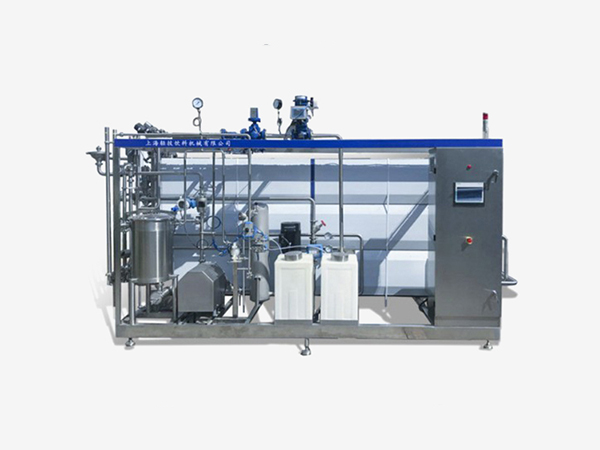
To execute these rigorous profiles, facilities deploy Advanced Pasteurizer Machines. These are not simple heating vats. They are closed-loop, automated systems governed by highly sensitive PID controllers capable of maintaining temperatures within a 0.5 degree Celsius margin. As the liquid flows through the gleaming stainless-steel holding tubes, sensors monitor temperatures at multiple checkpoints. They make real-time micro-adjustments to steam valves. If the system detects a temperature drop below the legal safety threshold, an automated flow diversion valve instantly routes the product back to the balance tank.
When handling low-viscosity liquid foods, thermal efficiency is paramount. The plate heat exchanger stands as an industry standard, offering a highly controlled environment for neutralizing spoilage.
The mechanical design of a Plate Pasteurizer is both elegant and effective. It consists of corrugated stainless steel plates compressed tightly within a rigid frame. These corrugations intentionally induce turbulent flow. This turbulence disrupts the fluid boundary layer to ensure rapid, uniform heat transfer.
Furthermore, these systems excel in energy recovery. Through regenerative heating, the hot, processed liquid pre-heats the incoming cold, raw product. This clever thermodynamic cycle can recover up to 90 percent of the thermal energy. For a facility processing 10,000 liters per hour, this drastically shrinks utility bills and reduces boiler load.
For premium beverages where capturing delicate sensory notes is the highest priority, operators turn to specific configurations engineered for absolute speed.
A Flash Pasteurizer operates on the principle that higher temperatures require exponentially shorter holding times. In a typical cycle, the beverage is rapidly heated to around 74 degrees Celsius. Instead of resting in a vat, it rushes through a calibrated stainless-steel holding tube for exactly 15 seconds.
Following this brief hold, the liquid is instantly chilled. By limiting thermal exposure to mere seconds, the system prevents sugar caramelization and preserves volatile aromatic compounds. This continuous flow processing guarantees absolute product consistency and integrates seamlessly with high-speed automated packaging lines.
While pasteurization dominates the cold chain, modern global supply networks often demand products that can survive shipping and storage at room temperature. This requires moving beyond standard vegetative bacteria to address robust endospores.
Ultra-High Temperature processing forces a liquid to extreme temperatures. A commercial UHT Sterilizer handles these intense parameters safely, pushing temperatures to 140 degrees Celsius while holding the heat for an incredibly brief 2 to 4 seconds.
This extreme heat achieves commercial sterility. It eradicates all pathogenic microbes and dormant spores. Because the exposure is limited to a single second, the macro-nutritional profile survives the flash of heat largely intact. When paired with aseptic packaging environments, the final product can sit safely on a pantry shelf for up to twelve months.
Investing in thermal processing infrastructure heavily impacts product safety, operational overhead, and brand reputation. Facility managers must objectively evaluate several technical parameters before making a procurement decision.
The physical makeup of your beverage dictates the mechanical design of the heat exchanger. Viscosity and particulate matter are the primary concerns. Plate systems are excellent for clear fluids like milk or filtered apple juice. However, if you attempt to force pulpy orange juice through a plate system, the narrow channels will quickly clog. This leaves behind a sticky, burnt residue known as fouling, causing costly production downtime. For particulate-heavy liquids, wider tubular heat exchangers are mandatory to ensure solids pass through smoothly without being crushed.
Equipment must be accurately sized to match upstream processing and downstream packaging speeds. Buyers must calculate their required flow rate in liters per hour. Installing a thermal processor that outpaces the filling line creates bottlenecks. This forces the product into recirculation loops that inadvertently degrade quality through repeated thermal stress.
Heat treatment effectively kills spoilage organisms through targeted protein denaturation and enzyme inactivation. The secret to avoiding a cooked, flat taste lies entirely in mastering the time-temperature relationship via rapid heating and immediate, aggressive cooling.
Achieving this delicate balance requires the correct industrial machinery. Reliable equipment guarantees strict regulatory compliance while protecting the sensory qualities that define your brand reputation.
Pathogenic bacteria in liquids are typically neutralized starting at 71.5 degrees Celsius. However, the exact temperature depends on the holding time. Standard industrial practices hold the liquid at 72 degrees Celsius for 15 seconds to ensure complete bacterial destruction while preserving flavor.
Extended boiling will destroy heat-sensitive vitamins like Vitamin C. However, modern short-time processing methods expose the liquid to heat for only fractions of a second. This rapid thermal cycle kills bacteria but is too brief to significantly degrade the macro-nutritional profile or vitamin content.
Yes, but it requires specific engineering designs to maintain product integrity. While plate systems are strictly best for smooth, clear liquids, tubular heat exchangers are utilized for products with pulps or solid chunks. These specialized designs ensure even heat distribution throughout the viscous fluid, neutralizing bacteria without inadvertently cooking or crushing the solid particles.
No, it is specifically engineered to protect the original flavor profile. The system is designed to heat the product for only a few seconds and cool it instantly. This rapid thermal cycle prevents the caramelization of natural sugars and halts the breakdown of delicate flavor compounds.
Rapid cooling immediately stops the thermal processing effect at the exact right moment. If a product remains hot for too long after the holding phase, it will begin to chemically cook. Immediate, aggressive chilling is the critical step that allows heat treatment to kill harmful organisms without ruining the sensory qualities of the product.
Take the time to evaluate your current production lines today. Upgrading your thermal processing capabilities ensures your beverages remain safe, compliant, and delicious. For tailored engineering solutions and to find the exact equipment matching your production volume, explore the specialized systems at https://www.ygtmachinery.com and secure your product quality today.


