

Views: 0 Author: Site Editor Publish Time: 2026-10-25 Origin: Site


In the food, beverage, and pharmaceutical sectors, safety and quality are non-negotiable. Thermal processing serves as the backbone of shelf-stable product manufacturing. It relies on a high-stakes balance. You must destroy harmful microorganisms without compromising the physical integrity of the packaging. Central to this process is the sterilization kettle. But how exactly does this equipment manipulate the laws of physics? How does it ensure that cans, pouches, or glass jars do not burst during intense heating? This article explores the mechanical intricacies of pressure control in a sealed vessel. We will look at the science behind it and explain why precision is the hallmark of modern manufacturing.
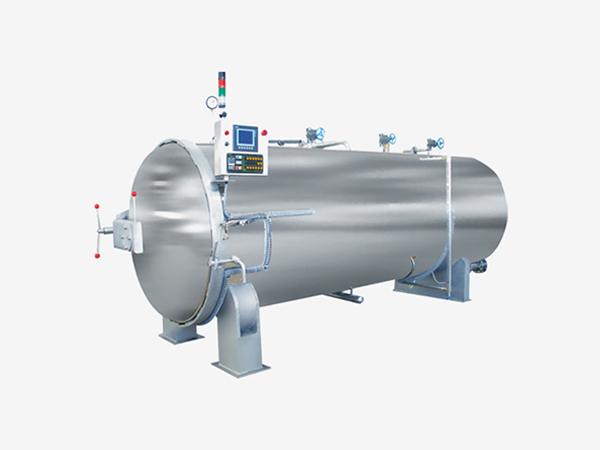
In industrial food processing, achieving commercial sterility is a regulatory mandate rather than a simple operational choice. The equipment tasked with this heavy lifting is the sterilization kettle. Plant engineers often refer to it as an industrial retort or autoclave. Fundamentally, this heavy-duty, pressure-rated vessel executes precise thermal cycles. It typically targets temperatures between 110°C and 135°C to eliminate pathogens like Clostridium botulinum.
The real engineering challenge lies in the sealed vessel aspect. Once the heavy doors are secured, the chamber transforms into a closed thermodynamic system. It must withstand immense internal forces generated by high-temperature steam and injected compressed air. The structural integrity of this vessel acts as a gatekeeper. It separates the harsh processing environment from the ambient factory floor. This ensures the product receives the required lethality while preserving texture, flavor, and nutritional value.
To grasp the necessity of pressure regulation, you must observe the interplay of thermal expansion and gas laws. As the temperature of a packaged product rises, the volume of the product itself expands significantly. Any residual headspace air also expands. Simultaneously, moisture inside the product begins to vaporize. This creates intense internal steam pressure.
This physical reaction creates an immediate risk to the package. If the pressure inside the container exceeds the pressure inside the vessel, the container will inevitably swell, deform, or burst. This is exactly where the concept of counter-pressure becomes essential. The kettle acts as a dynamic stabilizer. It injects compressed air to match or slightly exceed the internal pressure of the package. This keeps external forces in perfect equilibrium with internal forces, preventing the container from buckling under extreme processing environments.
Looking at current industry trends, manufacturers are rapidly shifting toward smarter, data-driven control systems. The push for stringent food safety compliance under global regulatory guidelines demands absolute traceability. Modern facilities no longer rely on manual gauge readings. Instead, they utilize automated systems that adjust pressures in real-time. This industry-wide upgrade prioritizes precision to drastically reduce product waste, lower energy consumption, and ensure consistent batch quality.
Building pressure is a multi-phase, highly orchestrated sequence rather than a static event. The process begins with initial pressurization and air purging. Before introducing heat, the system must establish a baseline pressure to ensure the structural integrity of the door seals. In pure steam systems, this phase involves flushing out ambient air. Trapped air acts as an insulator and creates dangerous cold spots inside the chamber.
Moving into the heating phase, the machine begins to compensate for the expanding product. Steam provides the thermal energy to destroy bacteria. Concurrently, compressed air is injected to provide the necessary counter-pressure. Highly sensitive transducers monitor this fluctuation constantly and send data back to the control system. This feedback loop ensures the pressure rise inside the vessel perfectly mirrors the pressure rise inside the packaging. During the holding phase, control algorithms work tirelessly to maintain this steady state. If the pressure drops even slightly due to a microscopic leak or temperature fluctuation, the system reacts in milliseconds to introduce more air.
The cooling phase represents the most dangerous part of the entire cycle. When cold water hits the product, the chamber temperature drops rapidly. However, the core of the product remains extremely hot. Releasing external pressure too quickly will cause the product's internal pressure to burst the seams. Therefore, the vessel executes a programmed, gradual pressure decline. This decline matches the product cooling curve, transitioning the package safely back to atmospheric conditions.
Manufacturing needs vary wildly across different product lines. The industry has evolved to offer distinct technologies tailored to specific packaging requirements. Understanding these differences is crucial for optimizing both line speed and product safety.
For operations prioritizing uniform temperature distribution and delicate handling, a Water Bath Sterilizer is often the preferred choice. These systems submerge products in heated water. They leverage the high thermal inertia of water to provide stable, consistent heat transfer. This method is exceptionally well-suited for flexible pouches and glass jars where rapid temperature shifts could cause catastrophic failure.
In contrast, steam-air mix systems focus on speed and efficiency for rigid containers. They utilize high-velocity fans to circulate a precise mix of steam and air. This allows for rapid heating and exact counter-pressure control, making them ideal for tinplate cans.
| Technology Type | Best Suited For | Heat Transfer Medium | Key Engineering Advantage |
|---|---|---|---|
| Water Bath Immersion | Flexible pouches, glass jars | Heated water | High thermal inertia, extreme temperature uniformity |
| Steam-Air Mix | Rigid metal cans | Steam and circulated air | Rapid heat penetration, low water consumption |
| Water Cascade / Spray | Plastic bottles, trays | Recirculated water spray | Balances efficient heat transfer with utility savings |
The mechanical hardware of a vessel would be largely ineffective without the central intelligence of the Programmable Logic Controller. Modern industrial trends heavily favor closed-loop feedback mechanisms. The controller does not just execute a static sequence; it interprets live data.
By continuously comparing the medium temperature with the internal vessel pressure, the controller calculates the anticipated expansion of the product. It then proactively adjusts the pneumatic valves. This level of automation effectively eliminates the guesswork that plagued earlier generations of thermal processing. Furthermore, these systems integrate comprehensive data logging. Facility managers can review historical process data to optimize efficiency or verify safety long after the production batch concludes.
Many operators mistakenly believe the thermal cycle ends the moment the chamber door opens. In reality, the moments immediately following the cycle dictate the final integrity of the packaging. The cooling rates and pressure release schedules determine whether a seal holds or fails. If pressure management falters during the final cooling stages, container seals may suffer microscopic stress. These defects often appear intact to the naked eye but will spoil on the shelf.
Understanding the rigorous post sterilization workflow is essential to preventing catastrophic product loss. This workflow includes implementing appropriate drying mechanisms and utilizing gentle, automated handling systems. Rough handling of wet packages can draw contaminated water or ambient air into microscopic leaks. This directly leads to post-process contamination and potential recalls. Forward-thinking facilities treat post-process handling as a seamless extension of the sterilization process itself.
Choosing the right sterilization machine is a foundational step for any capital equipment investment. Beyond the initial purchase price, engineers must evaluate how well the system integrates with existing workflows. A machine calibrated perfectly for rigid metal cans might destroy a batch of flexible pouches. Material compatibility must be your first filtration criteria.
When evaluating options, look closely at the Total Cost of Ownership. Modern systems should feature heat recovery units, optimized air injection manifolds, and efficient condensate drainage. Pay attention to the control interface. Equipment featuring touch screen control allows operators to easily program and store multiple product-specific recipes. You should demand transparent data from manufacturers regarding control valve response times and sensor redundancy. The ultimate goal is acquiring a robust system that meets current safety standards while offering the flexibility to adapt to future packaging innovations.
Mastering how a sterilization kettle builds and maintains pressure is a strict requirement for anyone involved in high-quality food or pharmaceutical production. By maintaining a delicate equilibrium between internal and external pressures, these machines guarantee product safety, extend shelf life, and minimize costly waste. As automation technology advances, the precision of these systems continues to improve. Modern thermal processing has evolved into a highly reliable science that protects both the manufacturer's bottom line and the consumer's health.
Operating pressures typically range between 0.15 MPa and 0.30 MPa, depending on the target temperature and the specific packaging material. The exact pressure is calculated to maintain the heating medium at the required sterilization temperature while providing enough counter-pressure to prevent packaging deformation.
Calibration involves comparing the kettle's pressure transducer readings against a certified, reference gauge. Technicians perform this across multiple pressure points within the standard operating range. Regulatory bodies require this calibration to be documented regularly to ensure absolute accuracy during thermal processing.
Both are utilized to serve distinct functions. Steam acts as the primary heat transfer medium due to its high latent heat capacity. Because steam pressure and temperature are locked together by physical laws, compressed air is injected to provide independent counter-pressure. Modern automated control systems manage the precise mixing ratio of these two elements.
This is highly discouraged. Different packaging materials possess varying structural integrity and expansion coefficients. Rigid metal cans tolerate vastly different pressure differentials compared to flexible plastic pouches. Your machine must be programmed with validated, product-specific recipes that account for the unique mechanical properties of each container type.
If the external chamber pressure drops to atmospheric levels while the product inside remains hot and expanded, a severe pressure differential occurs. This outward force causes flexible pouches to balloon and rupture. It forces glass jar lids to vent and causes metal cans to experience permanent deformation, such as buckling or paneling.
While the entire system relies on a network of components, the pressure transducer and the primary temperature probe are the most critical. These sensors must deliver highly accurate readings and undergo regular, documented calibration. This ensures the process remains compliant with food safety regulations and achieves the desired thermal lethality.
Water bath systems are favored for delicate containers because water provides excellent thermal inertia. Temperature changes occur gradually and uniformly, significantly reducing the risk of thermal shock that can shatter glass or stress plastic seals. The submersion also provides a natural, even hydrostatic pressure that remains extremely stable throughout the heating and cooling stages.
Achieving absolute precision in pressure management is critical for product safety and production efficiency. If your current equipment struggles with flexible packaging or lacks advanced data logging, it is time to evaluate modern solutions. Visit YGT Machinery to explore our full range of industrial sterilization kettles, water bath sterilizers, and automated post-sterilization handling systems designed to optimize your manufacturing line.


