

Views: 0 Author: Site Editor Publish Time: 2026-03-30 Origin: Site


Not every beverage preservation method solves the same production problem, and that is exactly why the Flash Pasteurizer is often compared with tunnel systems, batch pasteurization, and UHT processing. Many buyers already know these terms, but they are not always sure where flash pasteurization fits or when it is the better choice. For beverage manufacturers planning practical, efficient processing lines, Shanghai QingJi Beverage Machinery Co., Ltd. provides integrated dairy and beverage solutions that help customers match the right thermal method to the right product and production target.
The clearest difference is where the treatment happens. A Flash Pasteurizer processes the liquid while it is moving through the line, before the final package is filled and sealed. This makes it very different from systems that treat the product after packaging. In flash pasteurization, the beverage is heated, held for a short time, and cooled in a controlled flow path.
This in-line approach is especially suitable for liquid products that need continuous processing. It works well when the manufacturer wants the beverage to be treated before going to the next production stage, such as storage, filling, or further handling. The product stays in motion, which helps make the process faster and easier to integrate into a complete beverage line.
Because a Flash Pasteurizer works in line, it affects the whole layout of the factory. The system needs to connect smoothly with tanks, pumps, valves, and sometimes equipment such as separators or homogenizers. This creates a more connected production flow than methods that treat products in final containers.
That difference can also improve flexibility. When the pasteurization step is built into the line, the factory can organize product transfer and downstream handling more efficiently. For manufacturers producing liquid beverages at a steady pace, this kind of structure is often more practical than using a process built around packaged containers or slower batch cycles.
A Flash Pasteurizer and a tunnel pasteurizer do not work at the same stage of production. Flash systems treat the liquid before final packaging, while tunnel pasteurizers act on already filled and sealed containers that move through a heating and cooling zone. This means the two systems support very different production methods.
A flash system is generally the better fit when the beverage needs fast in-line treatment before it reaches the filling stage. A tunnel system is more closely tied to products that are already packaged and then processed on a conveyor. For buyers, this difference is important because it is not only about equipment style. It is about when the product is treated and how the whole line is designed.
Another difference is how the equipment fits into the plant. A Flash Pasteurizer is often more compact in terms of production flow because it is built into the line rather than arranged around packaged products moving through a long treatment zone. Tunnel systems can require more space, especially in larger packaged beverage operations.
The use case is different as well. Flash pasteurization is often chosen for liquid processing lines where speed, in-line control, and integration matter. Tunnel pasteurization is more common in packaging-focused operations where the final container is already part of the process before thermal treatment begins. One method is not automatically better than the other, but they solve different problems.
A Flash Pasteurizer is also different from batch pasteurization because of how the process is organized. Flash systems are designed for continuous flow, meaning the product moves through the equipment without stopping for a full batch cycle. Batch pasteurization works in a more step-by-step way, with one batch being treated over a longer period before moving on.
This creates a practical difference in production rhythm. Continuous processing supports smoother output and can suit factories that need a steadier operating pace. Batch systems may feel simpler in some settings, but they usually move more slowly and may not fit the same level of throughput.
Batch pasteurization can make sense for smaller-scale operations, pilot production, or situations where speed is not the main priority. A Flash Pasteurizer is often the better fit when the factory wants faster throughput, more continuous operation, and easier integration with a complete beverage line.
For commercial beverage production, that difference matters. The right choice depends on how much product the manufacturer plans to make, how the line is arranged, and whether the business needs steady in-line treatment rather than longer batch cycles.
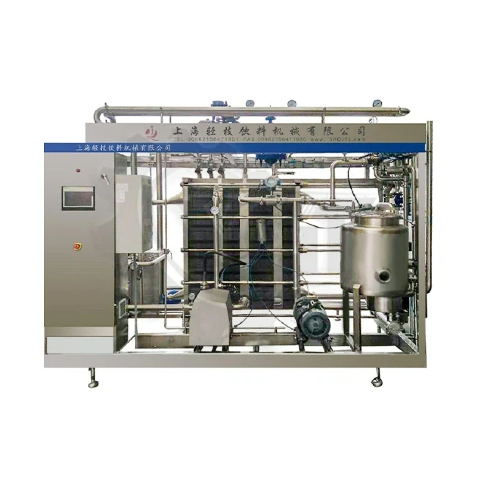
One of the biggest comparisons buyers make is between a Flash Pasteurizer and a UHT system. These are not the same process. Flash pasteurization is used to treat liquid products quickly and support product safety under pasteurization conditions. UHT goes further and is associated with a much higher level of treatment aimed at much longer shelf-life performance when the rest of the process is matched correctly.
This means the production goal is different from the beginning. Flash pasteurization is usually chosen when the manufacturer wants a practical balance of safety, product quality, and continuous beverage processing. UHT is more relevant when the business target is shelf-stable commercial distribution over a much longer period.
This difference also changes the distribution model. Products processed by a Flash Pasteurizer are often associated with shorter-life distribution conditions than UHT-treated products. UHT systems are more closely linked to longer-life products that may not require refrigeration before opening, depending on the full process and packaging setup.
So the better choice depends on what the producer wants to sell. If the product goal is a fresh-style beverage with efficient in-line treatment, flash pasteurization may be more suitable. If the goal is a shelf-stable packaged drink for a much longer market life, UHT may make more sense. The process should always match the product strategy.
Many producers prefer flash pasteurization because it works well for heat-sensitive beverages that benefit from shorter thermal exposure. Milk drinks, juices, tea beverages, and similar products often need a treatment method that supports safety while helping preserve more of the product’s intended taste and appearance.
At the same time, the in-line structure fits well with modern beverage plants. The product moves through the process quickly, and the system can connect with the rest of the line in a practical way. For manufacturers that value continuous flow and stable daily operation, this creates a strong reason to choose a Flash Pasteurizer.
Another reason flash systems are popular is that they offer a practical balance. The process is fast, the equipment can support continuous production, and the product usually receives less overall heat exposure than in slower treatment methods. That combination makes the system attractive for manufacturers looking for both product quality and production efficiency.
In business terms, this balance matters a great deal. A machine that supports acceptable product quality, smooth production flow, and efficient operation can contribute directly to factory performance. That is why flash pasteurization remains a common choice in many beverage applications.
A Flash Pasteurizer is usually the better choice when the product is a liquid beverage that needs continuous in-line treatment before final packaging. It is particularly useful when the producer values flow efficiency, moderate shelf-life goals, and a process that fits into a connected beverage line.
Production volume also matters. Flash systems are often suitable for operations that need more than a simple batch pace but do not require the full commercial logic of UHT processing. Packaging route matters as well, because flash treatment is closely tied to what happens before final filling rather than after packaging.
Before deciding, buyers should ask practical questions. Is the product heat-sensitive? Does the factory need continuous in-line processing? Is the target a fresh-style beverage or a long-life shelf-stable product? Will the line be integrated with separators, homogenizers, or filling systems? These questions help clarify whether flash pasteurization is truly the right fit.
This kind of evaluation is more useful than comparing machines by name alone. A Flash Pasteurizer should be chosen because it suits the real product and production plan. For manufacturers building or upgrading beverage lines, this comparison-based thinking leads to better long-term results.
Method | Where Treatment Happens | Typical Shelf-Life Outcome | Packaging Relationship | Best-Fit Scenario |
Flash Pasteurizer | In line before final packaging | Moderate shelf-life improvement | Product treated before filling | Continuous liquid beverage processing |
Tunnel Pasteurizer | On filled and sealed packages | Depends on packaged product process | Product treated after packaging | Conveyor-based packaged beverage lines |
Batch Pasteurization | In tank or batch vessel | Varies by process | Usually earlier-stage product handling | Smaller or slower production cycles |
UHT Processing | In line before aseptic filling | Much longer shelf-life target | Closely linked to aseptic packaging | Shelf-stable beverage production |
A Flash Pasteurizer is different not because it is always better than every other method, but because it solves a specific production problem very well: fast in-line pasteurization for liquid beverages that need safety, product quality, and efficient operation. For many dairy and beverage projects, that makes it a practical choice between slower batch methods and more demanding long-life processing systems. Shanghai QingJi Beverage Machinery Co., Ltd. provides processing solutions across different beverage applications, helping customers compare line options and match the right system to the right product. If you are evaluating a new project or updating an existing line, contact us to learn how the right beverage preservation method can support your goals.
The biggest difference is where the treatment happens. A Flash Pasteurizer treats the liquid before final packaging, while a tunnel pasteurizer treats already filled and sealed containers.
Not in every situation. A Flash Pasteurizer is often better for continuous production and faster throughput, while batch pasteurization may still suit smaller or slower operations.
Flash pasteurization and UHT serve different goals. Flash is used for fast in-line pasteurization, while UHT is used for much longer shelf-life targets and usually works with aseptic packaging.
A manufacturer should consider a Flash Pasteurizer when producing liquid beverages that need continuous in-line treatment, stable quality, and an efficient processing flow before final filling.


