

Views: 0 Author: Site Editor Publish Time: 2026-04-20 Origin: Site


Shelf-stable milk, juice, tea drinks, and other liquid products do not stay safe and stable by accident. Behind that result is the UHT Sterilizer, a key system used in modern dairy and beverage processing. For manufacturers that want longer shelf life, dependable safety control, and more flexible distribution, this equipment plays an important role. As a professional food machinery supplier from China, YGT provides turnkey solutions for juice, dairy, and beverage production lines, including UHT sterilizers, filling machines, CIP systems, installation, and technical support, helping customers build practical and reliable processing projects.
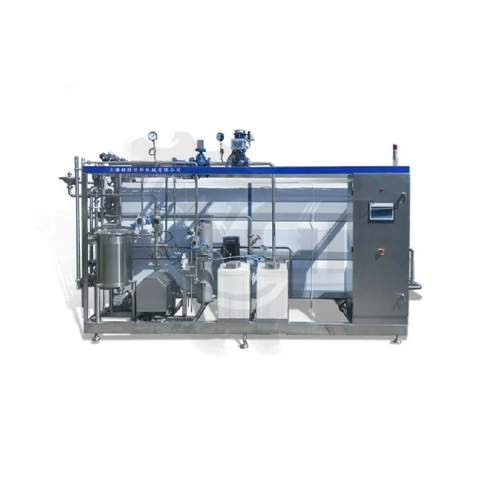
A UHT Sterilizer is designed to heat liquid products to a very high temperature for a very short time and then cool them rapidly. The purpose is to reduce harmful microorganisms and improve product stability, rather than simply heating the liquid in a general way. This controlled thermal process helps manufacturers produce liquid foods that can achieve a much longer shelf life than ordinary chilled products.
That is why the equipment matters so much in commercial production. It is not just a heater placed somewhere in the line. It is a processing solution that helps turn perishable liquids into products that are safer to store, easier to transport, and more practical to sell across a wider market. For many beverage and dairy brands, that difference directly affects how the product can be packaged, distributed, and positioned.
The key to UHT processing is not temperature alone. Time matters just as much. If a product is heated for too long, it may suffer unnecessary quality loss. If heating is too mild, the treatment goal may not be reached. UHT processing works because it combines very high temperature with a very short holding period, creating a more efficient balance between safety and product quality.
For manufacturers, this means two important benefits. First, the product can achieve stronger shelf-life performance. Second, the process can help maintain more stable taste, color, and overall quality than a less controlled heating method. This is one of the main reasons why UHT technology is widely used in liquid food production today.
Dairy is one of the most common applications for a UHT Sterilizer. The system is widely used for milk, flavored milk, milk beverages, and other dairy-style liquid products. These products require reliable hygiene control and stable thermal treatment, especially when the producer wants longer shelf life and broader distribution.
For dairy processors, UHT treatment offers a more flexible commercial path. Instead of relying only on short refrigerated distribution cycles, they can produce goods that are easier to store and transport before opening. This can support larger market coverage and make supply planning more efficient. It also gives manufacturers more options when they want to expand beyond local delivery and enter regional or overseas channels.
A UHT Sterilizer is also suitable for juice, fruit beverages, tea drinks, and selected liquid food products. In these categories, producers need to balance safety, shelf life, and product quality. A well-designed UHT system helps support that balance by giving the line more controlled processing conditions.
This is also where the broader production system becomes important. Beverage producers usually do not need only one machine. They need equipment that matches the product formula, the intended package, and the final market plan. YGT develops equipment solutions for dairy and beverage processing lines, which helps customers build projects that are not only technically workable but also commercially practical.
A UHT Sterilizer works as part of a complete production line rather than as a standalone unit. Before the product reaches the sterilizer, it may pass through blending, filtering, standardizing, or homogenizing steps. After thermal treatment, it typically moves toward sterile storage, filling, and packaging.
That position in the line is important because successful processing depends on coordination. Even if the sterilizer itself performs well, the final result can still be affected by poor upstream preparation or unsuitable downstream handling. This is why many buyers now pay attention to line integration rather than focusing only on one machine.
For this reason, turnkey support has real value. YGT not only supplies key processing equipment, but also supports layout planning, installation, commissioning, and training. For overseas buyers especially, this kind of integrated project support can reduce communication difficulties and help the production line move into operation more smoothly.
Sterilization alone is not enough to protect the final product. Once the liquid has passed through UHT treatment, it must still be protected from contamination before and during filling. That is why aseptic filling is closely connected with UHT processing.
This point is especially important for buyers who are still learning the process. They may first focus on heating temperature, but the real value of a UHT Sterilizer depends on the full protected path from treatment to packaging. If the product is exposed again after sterilization, the shelf-life advantage can be weakened. That is why reliable downstream handling is a necessary part of a successful UHT line.
One of the biggest differences between UHT sterilization and ordinary pasteurization is shelf life. Pasteurized products usually require refrigeration and often have a shorter storage period. UHT-treated products, when processed and packed correctly, can often remain shelf-stable before opening.
This difference changes how products can be sold and distributed. A pasteurized beverage may suit local chilled delivery, while a UHT-treated product can support broader warehousing and transport plans. For manufacturers that want stronger market reach, this becomes a major operational advantage.
Many buyers use these two terms loosely, but they refer to different production targets. Pasteurization is generally used for products with a lower level of heat treatment and a shorter shelf life. UHT sterilization is used when the goal is a higher level of microbial control and a longer commercial life for the product.
That is why process choice should be based on business needs, not on general assumptions. If the target is a shelf-stable beverage or dairy product, a UHT Sterilizer is often much more relevant than a standard pasteurization system. A clear understanding of this difference helps buyers define their projects more accurately from the beginning.
The right UHT system depends on several practical factors. Buyers need to think about production capacity, product category, and whether the liquid contains pulp, suspended solids, or heat-sensitive ingredients. Milk, juice, tea beverages, and mixed drinks do not all behave in the same way during thermal treatment.
Capacity planning matters as well. A system should support current output needs while also allowing room for future development. A line that is too small may limit growth, while a system that is oversized may not be the most efficient investment. This is why experienced technical support is important during the early project stage.
Modern buyers also care about daily operation. They want equipment that is easy to control, easy to clean, and easy to connect with tanks, fillers, and CIP systems. These factors affect labor efficiency, maintenance workload, and long-term production stability.
YGT focuses on quality, reliability, and practical engineering support. For customers planning beverage or dairy projects, this means the discussion is not only about machine specifications, but also about how to achieve stable production in real factory conditions.
Longer shelf life gives manufacturers more freedom in logistics and sales planning. Products can remain in storage longer, travel farther, and reach more markets without depending entirely on rapid chilled distribution. This is especially useful for growing brands, export projects, and producers working across multiple regions.
For companies that want to improve distribution efficiency while maintaining product stability, UHT processing provides a strong practical advantage.
A well-designed UHT process also supports more consistent manufacturing. It helps reduce spoilage risk, improve hygiene control, and support repeatable quality from batch to batch. That consistency matters not only in the factory, but also in the market, because customers expect the same taste, stability, and safety every time they buy the product.
In this sense, a UHT Sterilizer is not only a technical device. It is also a production tool that helps support brand reputation and long-term commercial growth.
Function | Typical Product Types | Processing Focus | Packaging Requirement | Main Benefit |
High-temperature short-time treatment | Milk, juice, tea drinks, liquid foods | Microbial control and shelf-life improvement | Clean downstream handling and filling | Longer shelf life |
Continuous liquid processing | Dairy and beverage products | Stable heating and rapid cooling | Integrated line design | Better production efficiency |
Industrial food safety support | Shelf-stable beverages | Consistent process control | Often paired with aseptic filling | Wider distribution flexibility |
A UHT Sterilizer is not just a heating machine. It is a core processing solution for manufacturers that want safer liquid products, longer shelf life, and more flexible distribution in dairy and beverage production. With experience in juice and dairy processing lines, Shanghai QingJi Beverage Machinery Co., Ltd. provides practical equipment and turnkey support for customers looking to improve production performance and build reliable projects. If you are planning a milk, juice, or beverage line, contact us to learn how the right ultra high temperature sterilization solution can support your business.
A UHT Sterilizer is used to treat liquid foods at very high temperature for a very short time so they can achieve better safety and a longer shelf life.
Common products include milk, flavored milk, juice, tea drinks, and other liquid beverages, depending on the product formula and line design.
No. Pasteurizers and UHT systems are used for different processing goals. UHT treatment is generally intended for products that require longer shelf life and a higher level of treatment.
Because the product must remain protected after sterilization. Clean transfer and filling help preserve the shelf-life benefit created by the UHT process.


