

Views: 0 Author: Site Editor Publish Time: 2026-11-08 Origin: Site


Food and beverage manufacturers face a brutal daily challenge. You must neutralize harmful bacteria for a long shelf life while protecting natural flavor, color, and nutrients. This is especially tough with heat-sensitive liquids like dairy milk, plant-based alternatives, and nutritional shakes. Excessive heat causes scorching. Proteins denature. Burnt deposits stubbornly foul internal piping. The solution lies in advanced thermal engineering. A high-quality UHT Sterilizer solves this exact problem. By leveraging rapid heating, precise flow dynamics, and advanced thermodynamics, these machines process liquids at extreme heat without compromising quality. Let us break down the exact mechanisms that prevent scorching and keep your production line running flawlessly.
The beverage market is undergoing a massive transformation. Consumers demand extended shelf life, but they absolutely refuse artificial preservatives. This clean label movement forces producers to rely entirely on thermal processing for product safety. Furthermore, the explosive growth of plant-based milks—like oat, almond, and soy—introduces new engineering headaches. Plant proteins and starches are notoriously prone to coagulation and burning under high heat. To stay competitive, modern facilities must upgrade their thermal processing capabilities. Relying on outdated pasteurizers simply results in burnt off-flavors, severe fouling, and constant machine downtime.
Ultra-High Temperature processing achieves commercial sterility. Liquids hit temperatures exceeding 135°C. This eradicates viable microorganisms and spores. The result is a shelf-stable product requiring no refrigeration. But pumping a sensitive liquid to these extremes is risky. Heat it too slowly, and the Maillard reaction triggers non-enzymatic browning. The liquid tastes caramelized or burnt. Worse, whey proteins denature and stick aggressively to hot stainless steel walls. We call this fouling.
Fouling acts as an insulating blanket inside the pipes. The system then works harder to maintain target temperatures. Paradoxically, this extra heat input accelerates the exact scorching we want to avoid. Overcoming this requires strict control over thermodynamics and fluid behavior.
The core defense against scorching is the flash heating concept. Pathogen destruction and chemical degradation happen at vastly different rates. Pathogen lethality accelerates exponentially faster than chemical damage above 135°C. We push the temperature up rapidly. The system reaches total microbial safety while bypassing the slower browning reactions entirely.
Once at the target temperature, the fluid enters the holding tube. Engineers calibrate the volume and length precisely to the flow rate of the pump. The liquid stays at the sterilization temperature for exactly 2 to 5 seconds. This brief window is the ultimate sweet spot. It guarantees a 12-log pathogen reduction. Yet, it is fundamentally too short for complex chemical bonds in lactose and proteins to break down. By immediately routing the product into a flash-cooling phase, the system outpaces the physical burning process.
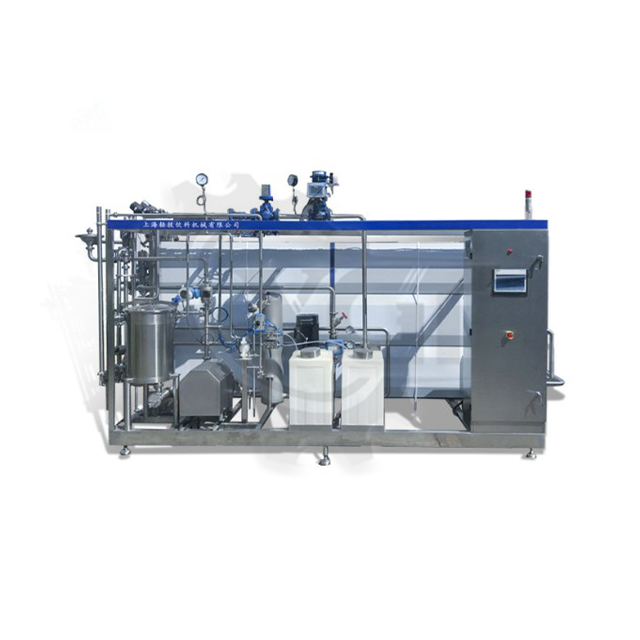
How we apply the heat matters immensely. Direct heating injects culinary-grade steam straight into the liquid. The temperature spikes from 80°C to 140°C almost instantly. The product then enters a vacuum cooling vessel, flash-boiling back to its base temperature. This near-instantaneous cycle minimizes thermal stress. It is exceptionally effective for maintaining the fresh taste profile of premium dairy and plant milks.
In contrast, indirect systems separate the heating medium and product with a stainless steel barrier. Modern corrugated tubes or specialized plates create a gentle and controlled temperature gradient. This prevents the fluid edges from contacting excessively hot stationary metal.
| Feature | Direct Heating (Steam Injection) | Indirect Heating (Tubular/Plate) |
|---|---|---|
| Heat Transfer Speed | Near-instantaneous | Gradual and controlled |
| Best For | Premium dairy, highly heat-sensitive plant milks | Standard dairy, juices, purees, viscous liquids |
| Scorching Risk | Extremely low | Low with proper flow dynamics |
| Energy Efficiency | Moderate | High with integrated heat recovery systems |
Sterilization without quality loss is pure physics. We must push liquids at high velocities to induce turbulent flow. Laminar flow is the enemy. In a laminar state, liquid moves in smooth parallel layers. The layer closest to the heat source absorbs too much energy and inevitably burns. High-pressure pumps drive the fluid to exceed a Reynolds number of 4000. This chaotic and mixed state prevents local overheating.
Specifically, the primary threat is the microscopic boundary layer touching the pipe wall. Stagnant fluid denatures and forms burnt deposits. Turbulent flow acts as a continuous mechanical scrubber. Constant radial mixing ensures no single drop stays against the hot wall for more than a microsecond. The liquid is perpetually folded in on itself and redistributed toward the cooler center of the flow.
A modern sterilization line relies on a sophisticated control network. We integrate premium industrial PLC systems and Proportional-Integral-Derivative control loops with high-speed Pt100 temperature sensors. The system monitors conditions hundreds of times per second. If the temperature deviates by even a fraction of a degree, the controller modulates steam and cooling valves instantly. This hyper-responsiveness prevents tiny temperature spikes that cause localized scorching.
Furthermore, automation serves as a critical safety net. Pressure drops or pump fluctuations trigger instantaneous corrective measures. If sensors detect a potential overshoot, the system throttles the steam supply immediately. If the temperature drops below the legal setpoint, a pneumatic flow diversion valve triggers instantly. The under-processed liquid returns to the balance tank. Every drop entering the packaging is perfectly sterilized and never burnt.
The microscopic topography of the machinery dictates fouling rates. Standard stainless steel contains microscopic peaks and valleys. Denaturing proteins get trapped there and begin to burn. High-end equipment utilizes SUS304 or 316L stainless steel that undergoes rigorous electropolishing. This creates a frictionless surface with a roughness average below 0.4 micrometers. The product glides through flawlessly without anchoring to the walls.
Hygienic design strictly eliminates dead legs. Fluid velocity drops naturally in sharp corners or dead zones. Stagnation increases the effective hold time, leading directly to over-processing. By utilizing swept tees, flush-mounted sensors, and smooth-radius bends, engineers maintain uniform fluid velocity. This guarantees a consistent thermal history throughout the entire duration of the process.
Selecting the right equipment requires matching machine parameters to your specific fluid properties. You cannot guess when dealing with extreme heat.
Before moving a heat-sensitive formulation into high-volume production, you must understand ingredient reactions under pressure. Starches and sensitive protein buffers behave unpredictably at 135°C. To mitigate massive financial risk, smart manufacturers run trials on a Pilot UHT HTST SYSTEM. These miniaturized units mirror commercial thermodynamics but operate at smaller capacities, typically 20L/H to 50L/H. R&D teams safely tweak variables, identify exact scorching thresholds, and optimize recipes before full-scale commitment.
Transitioning to a commercial UHT milk production plant demands holistic integration. Production capacities typically range from 500L/H up to a massive 20,000L/H. The sterilizer must synchronize with upstream deaeration to remove dissolved oxygen and prevent oxidation browning. Downstream aseptic homogenizers break up protein clusters formed during heating. Perfect synchronization guarantees a stable, creamy, and unburnt final product.
Processing heat-sensitive products demands ultra-short holding times, high-velocity fluid dynamics, and cutting-edge automation. You no longer need to sacrifice fresh taste for shelf stability. Precision engineering—from electropolished piping to millisecond-accurate PLC controllers—prevents scorching entirely. Are you ready to upgrade your thermal processing capabilities? Whether your R&D team needs a pilot unit to test new recipes, or you are scaling up to a massive commercial facility, choosing scientifically designed equipment is your ultimate key to success. Visit YGT Machinery today to explore advanced sterilization solutions and find the perfect match for your production line.
Standard pasteurizers operate on the HTST principle, heating products to roughly 72°C for about 15 seconds. This kills pathogens but leaves spoilage organisms alive, meaning the product still requires constant refrigeration. In contrast, UHT sterilization uses extreme heat above 135°C for a very short 2 to 5 second duration to achieve commercial sterility. This allows the product to be stored at room temperature for months.
Yes. Plant-based beverages like oat or almond milk contain starches and plant proteins that are highly sensitive to heat. Modern systems successfully process these by using intense turbulent flow and rapid cooling cycles. This prevents the boundary layer of the liquid from stagnating and burning against the hot surfaces of the heat exchanger.
A pilot system provides a cost-effective environment for food scientists to test how new recipes react to extreme thermal stress. By running small-batch trials, companies can identify the specific temperature limits where proteins might denature or browning might occur. This ensures that once they scale up to a full production plant, the process is already optimized for success.
Generally, direct heating utilizing steam injection creates the least thermal stress because the heat transfer is near-instantaneous. This is ideal for extremely sensitive ingredients. However, modern indirect tubular and plate heat exchangers are also highly effective. They use advanced flow designs to create a gentle temperature gradient that prevents the product from contacting surfaces that are too hot.
Fouling is the build-up of proteins and minerals on internal machine parts. As this layer grows, it acts as an insulator, forcing the machine to use higher temperatures to hit its sterilization targets. This creates a vicious cycle where the machine gets hotter to compensate for the build-up, which in turn causes the product to burn more. It ultimately necessitates frequent shutdowns for cleaning.
Engineers utilize automated Clean-in-Place systems. These systems circulate highly concentrated caustic soda and nitric acid solutions at extreme velocities through the piping. The chemical breakdown combined with the high-shear mechanical scrubbing of the turbulent fluid effectively strips away all burnt proteins and mineral scale without requiring manual dismantling.
Maintaining a positive pressure differential is critical. Engineers use aseptic back pressure valves to keep the system pressure higher than the vapor pressure of the liquid at sterilization temperatures. If the pressure drops, the liquid will boil inside the heat exchanger. Boiling causes immediate vapor lock, severe fouling, and catastrophic scorching of the product.


