

Views: 0 Author: Site Editor Publish Time: 2026-11-20 Origin: Site


Building a commercial beverage facility demands a significant capital investment. When you are ready to partner with a manufacturer or engineering firm, relying on verbal promises is a recipe for disaster. Many contractors claim they can construct a state-of-the-art facility from the ground up, yet verifying these capabilities remains difficult without objective evidence. Ultimately, the proof lies in their historical portfolio. A reputable builder must provide transparent, highly detailed reference projects that align with your specific production goals. Whether your vision involves launching a cold-pressed fruit line or expanding into the market of ready-to-drink botanical infusions, knowing exactly what to scrutinize in a vendor's past work is the linchpin of a successful partnership.
Industry trends in beverage facility construction are shifting toward radical transparency and operational sustainability. Modern investors are no longer satisfied with static equipment photos; they demand dynamic case studies that highlight energy efficiency, water reclamation, and adaptive manufacturing. As the beverage market continues to fragment into niche, functional segments, the need for agile, multi-purpose processing lines has skyrocketed. Builders who cannot demonstrate this flexibility in their past projects risk losing ground to firms that prioritize modular, future-proof facility designs.
Evaluating potential engineering partners requires looking beyond isolated equipment sales. Selling a standalone pasteurizer is fundamentally different from engineering an entire interconnected facility. You must demand comprehensive, turnkey project references. It is vital to examine portfolios where the builder managed the facility's entire lifecycle. Reference documents should reveal 3D layout designs, utility routing plans, and workflow optimization models. A contractor who understands the spatial constraints of a Juice Beverage Production Plant can prevent expensive, time-consuming retrofits down the road.
A successful facility build extends far beyond dropping heavy machinery onto a concrete floor. Reference projects must include documented proof of successful on-site installation and rigorous factory acceptance testing. A true partner will showcase case studies where their engineers remained on-site until the client's team could operate the system independently. This level of accountability serves as a non-negotiable metric for evaluating overall vendor competence.
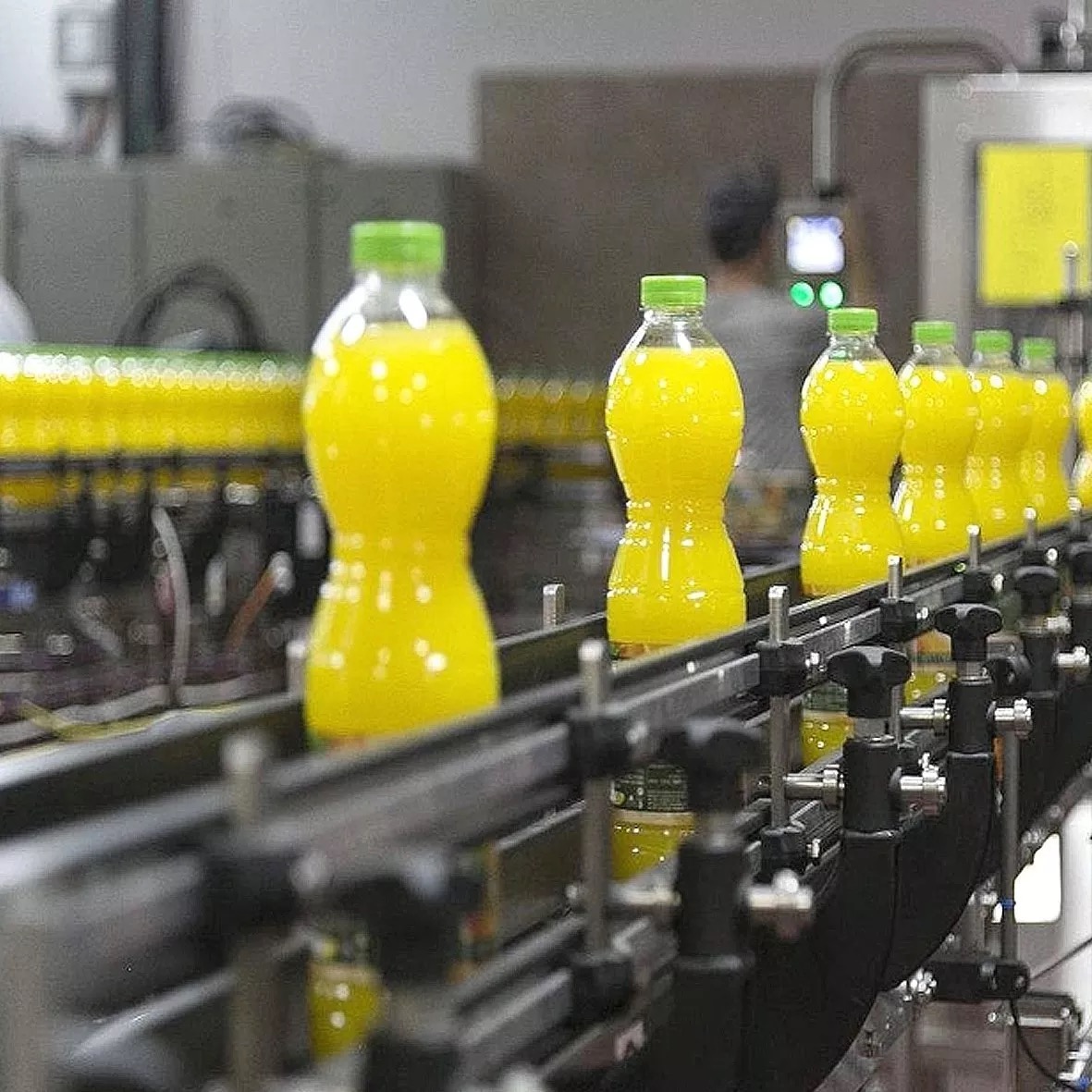
A generic portfolio is insufficient for specialized manufacturing. The physical and chemical properties of fruits vary, meaning the builder must grasp the unique extraction and filtration nuances of your specific ingredients. Processing tough, fibrous fruits presents severe mechanical hurdles. For instance, citrus requires delicate oil extraction to prevent bitterness, while tropical fruits demand heavy-duty crushing mechanisms. A highly competent builder should provide case studies of specialized lines, such as a dedicated Pineapple Processing Line, demonstrating their ability to maximize liquid yield while minimizing organic waste.
Filtration requirements also dictate a large portion of a facility's engineering design. The builder's past projects should demonstrate empirical expertise in deploying diverse filtration systems. Producing clear apple juice requires advanced membrane technology, while manufacturing pulpy mango nectar relies on precise high-pressure homogenization. Reviewing a reference for a juice processing plant that mirrors your desired product texture ensures the team understands the physics of beverage viscosity and clarity.
Modern brands rarely restrict themselves to a single category. Current consumer trends lean heavily toward functional beverages, requiring versatility from your manufacturing infrastructure. The global demand for ready-to-drink teas and fruit-tea hybrids necessitates specialized brewing and blending capabilities. A compelling reference project will highlight the installation of extraction tanks, high-speed clarifiers, and blending systems calibrated for delicate tea leaves. Incorporating a commercial tea drink processing machine into a broader facility demands thermal engineering to manage tannin extraction and prevent flavor cross-contamination.
Furthermore, the filling environment—whether hot fill or aseptic cold fill—must match your product's shelf-life requirements. High-acid juices often require traditional hot fill, whereas low-acid dairy-fruit blends demand complex aseptic environments. Evaluating case studies of both methods provides confidence that the builder can adapt their structural engineering to meet strict microbiological safety standards.
A beverage facility is, at its core, a space meticulously engineered for food production. You must verify that the builder operates in strict adherence to FDA, CE, or 3-A Sanitary Standards. Sanitation is the bedrock of the industry. Reference projects should detail the custom installation of automated, multi-tank Clean-in-Place systems. These networks ensure the eradication of bacteria, yeast, and mold between runs without requiring manual dismantling of equipment.
An elite engineering firm will also showcase the hidden infrastructure ensuring safety, such as sanitary orbital welding and dead-leg-free piping architectures. Elements like sloped polyurethane floors and stainless steel trench drains are vital to preventing bacterial harborage. Portfolios highlighting these granular details demonstrate a mature understanding of commercial food safety compliance.
It is crucial to differentiate between an actual original equipment manufacturer and a mere reseller. You need a partner capable of engineering custom solutions when standard, off-the-shelf machinery fails to meet your process requirements. Look for reports where the builder designed specific equipment to eliminate a unique client bottleneck. Whether it involves modifying a tubular pasteurizer for high-viscosity purees or fabricating a bespoke conveyor system for an awkward layout, custom fabrication proves mechanical competence.
Modern manufacturing relies on real-time data. Consequently, reference projects must highlight industrial automation capabilities. Look for portfolios featuring centralized control panels that utilize programmable logic controller and supervisory control and data acquisition networks. These systems monitor critical points like temperature and flow rate in real-time to ensure batch consistency while minimizing human error.
Matching your production volume with the builder’s record is essential to avoid under-capitalization or over-engineering. A robust engineering firm will display a diverse range of projects. Their portfolio should span from compact pilot lines for recipe testing to colossal mega-facilities built for international distribution. Reviewing historical projects that match your capacity needs ensures the builder understands the logistical and thermodynamic challenges of your specific operational scale.
Long-term growth requires modular design. Highlighted projects should include instances where a builder successfully expanded an existing client’s plant years after the initial build. This proves the mechanical reliability of their equipment and highlights their foresight in modular engineering. Designing with future expansion in mind will save significant capital on eventual upgrade costs.
Never accept marketing brochures at face value. Request comprehensive case studies that detail the original problem, the solution, and the implementation phases. More importantly, insist on site visits to operational plants. Watching a machine run, observing the workflow, and speaking with facility managers provides the ultimate proof of a builder’s competence. Additionally, prioritize projects backed by hard data, such as reduced downtime, increased juice yield, and energy savings from heat recovery systems.
Selecting the right engineering partner is the most critical operational decision for your business. By demanding to see detailed reference projects, you de-risk your capital investment. Whether you are launching a new product line or scaling an existing operation, our expert team is ready to assist. Review our portfolio of successful global installations and explore our custom processing lines to see how we can bring your innovative beverage concept to life.
The typical timeline for a commercial facility ranges from 3 to 8 months, depending on the scale and complexity. This includes the conceptual phase, 3D design, custom equipment manufacturing, shipping, and installation. Commissioning and staff training usually occupy the final 3 to 4 weeks.
Consumer preferences are shifting toward functional fruit-tea hybrids. A builder experienced in both domains understands the distinct biochemical processing requirements for each. They know how to integrate extraction and blending systems without risking cross-contamination or flavor degradation, ensuring a premium, stable final product.
Yes, modern facilities utilize modular engineering. This philosophy allows for interchangeable extraction machines on the front end. For example, operators can swap a citrus oil extractor for a destoner when transitioning between seasonal fruit runs, while continuing to use the same downstream pasteurization and filtration equipment.
Look for explicit mentions of international safety certifications. Key credentials include CE marking for European safety compliance, ISO 9001 for quality management systems, and adherence to FDA or 3-A Sanitary Standards for food-grade equipment. These certifications guarantee that machinery meets global hygiene and mechanical safety benchmarks.


