

Views: 0 Author: Site Editor Publish Time: 2026-04-16 Origin: Site


A longer shelf life can change far more than storage time, which is why many manufacturers invest in a UHT Sterilizer when building dairy and beverage lines. The real question is not whether this equipment can heat a product, but whether it can help create better business results through safer processing, wider distribution, and more stable production. For companies planning shelf-stable beverage projects, Shanghai QingJi Beverage Machinery Co., Ltd. provides UHT solutions as part of integrated processing lines for dairy, juice, and other liquid foods.
The most obvious reason to use a UHT Sterilizer is that it extends the commercial life of liquid products. When milk, juice, tea drinks, or similar beverages can stay stable longer before opening, manufacturers gain more freedom in production scheduling, storage, and delivery. They do not have to move products under the same level of urgency as short-life chilled goods.
This creates practical benefits across the business. Warehousing becomes easier to manage, shipments can be planned more calmly, and inventory pressure is reduced. A longer shelf life also lowers the risk of losses caused by delays or slower sales. For factories trying to improve stability in daily operations, that alone can justify the investment.
Shelf-stable products can usually travel farther and enter more channels than products that depend heavily on continuous refrigeration. This makes a UHT Sterilizer especially valuable for brands that want to expand distribution, enter export markets, or reach areas where cold-chain support is limited.
That wider reach creates more room for growth. A product with a longer sales window can move through wholesalers, supermarkets, and broader dealer networks more easily. For many beverage producers, this means the equipment supports not only processing, but also market expansion.
Another major reason factories use a UHT Sterilizer is product safety. Liquid foods are sensitive, and poor microbial control can quickly affect shelf life, stability, and customer confidence. UHT treatment helps manufacturers build a stronger foundation for safe and commercially stable products.
For dairy and beverage production, this kind of control is essential. A reliable thermal process reduces spoilage risk and helps keep the product in a more predictable condition during storage and distribution. That gives manufacturers greater confidence in the quality of what they deliver.
Safety is not only a technical requirement. It also shapes how the market sees a brand. When a beverage reaches customers in stable condition and performs as expected, trust grows. When quality problems appear, the damage can spread quickly.
That is why a UHT Sterilizer supports more than factory hygiene. It also supports reputation. Fewer complaints, more consistent products, and more predictable shelf life all help manufacturers build stronger customer confidence over time.
For suitable products, UHT processing reduces dependence on refrigeration before opening. This changes how goods can be stored, shipped, and sold. Instead of relying on a tightly controlled cold-chain route at every stage, manufacturers can work with a more flexible logistics model.
This is especially useful in export business and in regions where refrigeration is costly or uneven. A longer-life product can move through a wider distribution network with fewer restrictions, which helps simplify planning and improve market access.
As beverage brands expand, logistics often become a bigger challenge than production itself. A short shelf life can limit market reach, create pressure on distributors, and slow down new market entry. A UHT Sterilizer helps solve that problem by supporting products that are easier to move and manage.
For growing brands, this means the equipment becomes part of a commercial strategy. It supports faster expansion, broader sales coverage, and more realistic growth planning, not just a technical processing step.
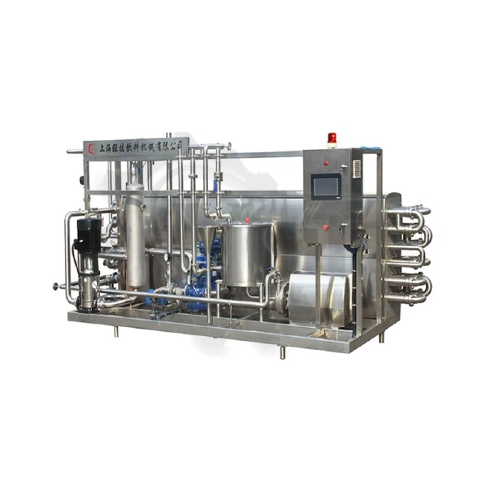
Some buyers assume stronger heat treatment always means greater quality loss. In practice, a UHT Sterilizer works through very high temperature and very short treatment time. That combination is designed to achieve the required process result while reducing unnecessary exposure to heat.
This matters because over-processing can affect taste, color, and overall product appeal. With proper process control, manufacturers can reach a better balance between safety, shelf life, and acceptable product quality.
A good result depends on more than temperature alone. Stable holding time, correct flow, reliable heat exchange, and proper line coordination all influence final performance. That is why process control matters just as much as the heating target itself.
For this reason, buyers often look for a complete and well-matched system rather than a single machine in isolation. Shanghai QingJi Beverage Machinery Co., Ltd. supports beverage and dairy projects with integrated line solutions, helping customers build more stable production conditions.
UHT systems are well suited to continuous production, which makes them practical for factories with larger output targets. Continuous treatment supports a steadier workflow and helps manufacturers organize production in a more efficient way.
Compared with slower methods, this kind of process can improve throughput and make better use of labor and plant time. For expanding beverage operations, that production rhythm is a significant advantage.
Modern processing lines are also expected to be easier to operate. Features such as automation, stable controls, and practical cleaning design can reduce workload and support smoother daily production. While exact results depend on the project, the overall benefit is clear: a well-designed UHT line can make plant operation more manageable.
This is important because real production efficiency is not only about output. It also depends on how easy the system is to control, maintain, and integrate into daily factory work.
The value of a UHT Sterilizer is not limited to one product type. It can support milk, juice, tea drinks, and other liquid formulations that require stable shelf-life performance. This gives producers more flexibility when developing product lines.
That flexibility is useful for companies serving different customer groups or planning new beverage categories. Instead of focusing on one narrow application, they can build around a process that supports wider commercial potential.
A beverage business rarely stays fixed. New flavors, new formats, and new market demands often appear as the brand grows. Scalable processing matters because the production line should support expansion rather than hold it back.
A UHT system can give manufacturers a stronger base for long-term development. It helps create a production structure that is not only useful now, but also more adaptable in the future.
Benefit | What It Means in Production | Business Impact | Best-Fit Product Types |
Longer shelf life | Easier storage and lower delivery pressure | Broader sales reach | Milk, juice, tea drinks |
Better safety | Stronger microbial control | Better brand trust | Dairy and liquid foods |
Flexible distribution | Less dependence on refrigeration before opening | Easier export and wider channels | Shelf-stable beverages |
Higher efficiency | Continuous and stable processing | Better plant workflow | Medium to large projects |
More product options | Supports multiple liquid formulas | Easier product expansion | Dairy and beverage lines |
The main value of a UHT Sterilizer is not only the sterilization step itself, but what that step makes possible: longer shelf life, safer products, broader distribution, and more efficient beverage production. Shanghai QingJi Beverage Machinery Co., Ltd. provides integrated solutions for dairy and beverage processing projects, helping customers build reliable lines that support both product quality and business growth. If you are planning a new project or upgrading an existing line, contact us to learn how the right UHT processing equipment can support your production goals.
Manufacturers use a UHT Sterilizer to improve shelf life, product safety, and distribution flexibility for liquid foods and beverages.
Yes. Because suitable UHT-treated products can remain stable longer before opening, they are often easier to store, transport, and distribute over longer distances.
Yes. Continuous processing and better line stability can help factories manage output more efficiently and support smoother daily production.
Common applications include milk, flavored milk, juice, tea drinks, and other liquid beverages that require longer shelf life and stable commercial distribution.


