

Views: 0 Author: Site Editor Publish Time: 2025-10-29 Origin: Site


When you pick coconut oil processing machines, think about what is most important. You need machines that get a lot of oil out and work well. The machine should fit the size of your business. Choose machines that control heat well, last a long time, and are easy to clean. Price matters too. The machine should work with what you already have.
Aspect | Details |
|---|---|
Market Focus | Information about the world market for coconut processing machines, including how much is made. |
Competitive Landscape | A look at who owns the most market share and how companies compare. |
Time Frame | Old data and future guesses from 2020 to 2031. |
You make more money when machines get more oil and use less power. New machines help you spend less on workers and make more profit.
Check that the machine’s features fit your real needs and business plans.
Pick machines that get the most oil and waste less. Good machines help you make more money.
Find machines with temperature control and automation. These features make your oil better and keep workers safe.
Choose a machine that matches your business size and future plans. Think about how much it can handle and how long it will last.
Check suppliers for their help and experience. A good supplier helps things run well and fixes problems fast.
Keep machines in good shape and train workers well. This makes machines last longer and keeps your oil clean.
Picking the right coconut oil processing machines helps you make more oil each day. Machines with smart features like automation and AI can speed up your work. They also help keep workers safe. You do not have to do as much work by hand. This means you make fewer mistakes and stop less often.
AI and automation let you change settings quickly.
Machines with controls keep things steady and smooth.
Efficient machines save energy and labor because you do not repeat batches.
Tip: Machines that control pressure well help you get more oil from each coconut and stop oil loss.
You want your coconut oil to look clear and taste good. The machine you choose is important for this. Some ways, like induced fermentation, can change the pH of coconut milk. This changes how the oil separates and can make the oil worse. If machines do not control pressure or temperature well, you might get oil with too many fines or need extra filtering.
Steady machines help you follow food safety rules.
Good temperature control keeps the oil safe from damage.
Less hand work means less chance of germs.
How much money you make depends on your machines. If you buy good equipment, you get more oil and better prices. It is easy to start small in this business and grow fast. But you should plan for regular check-ups and watch your water and power bills.
Good machines help you make oil that sells for more.
Reliable machines break less and stop less.
Smart planning for water and electricity keeps your plant working well.
Choosing the right coconut oil processing machines helps you work better, make good oil, and earn more money.
When you look at coconut oil processing machines, you’ll see that each step uses a different type of equipment. Let’s break down what you need for each stage.
You start by getting oil out of the coconut. First, you clean the coconuts and crush the dried meat (copra). Then, you use a press machine. If you run a big operation, a screw press works best. For smaller batches, a hydraulic press is easier to handle. Here’s a quick look at some common oil press models:
Model | Capacity (kg/h) | Power (Kw) | Dimension (m3) | Weight (kg) |
|---|---|---|---|---|
YZS-85 Oil Press | 60-80 | 5.5 | 1.20×0.40×0.90 | 200 |
YZS-95 Oil Press | 150-200 | 11 | 1.60×0.70×1.35 | 530 |
YZS-105 Oil Press | 210-300 | 15 | 1.83×0.70×1.35 | 550 |
YZS-128 Oil Press | 300-375 | 15 | 2.01×0.60×1.17 | 775 |
YZS-130 Oil Press | 450-500 | 18.5 | 2.00×0.80×1.38 | 850 |
YZS-150 Oil Press | 750-850 | 30 | 2.18×0.79×1.79 | 1380 |
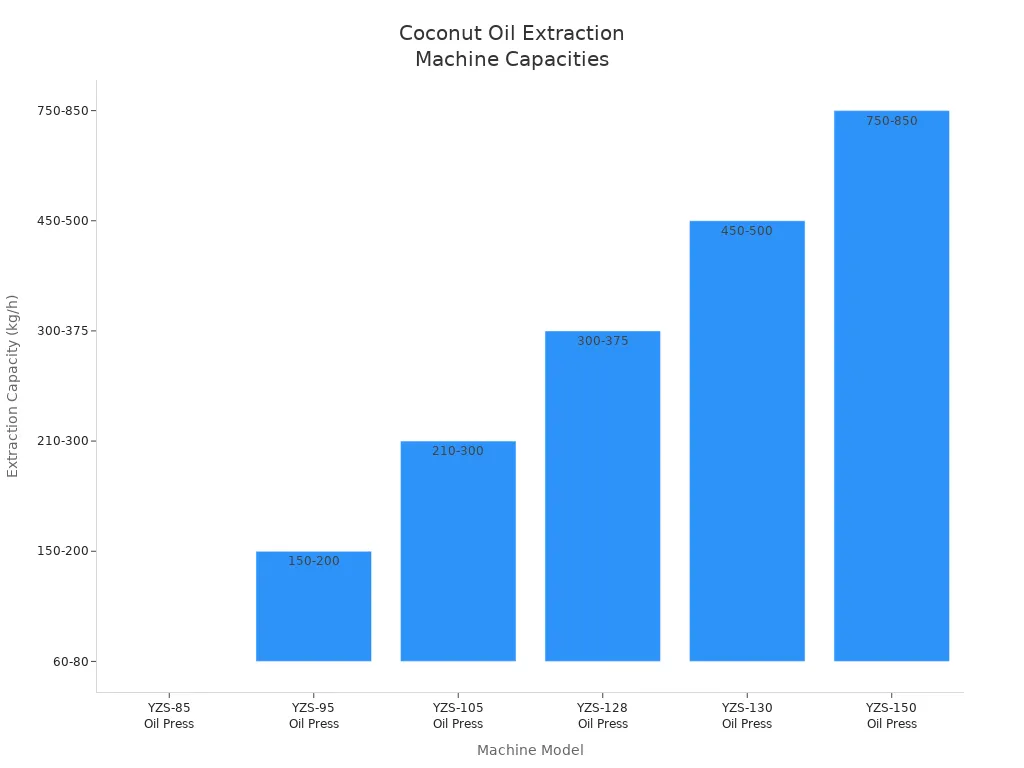
Tip: Choose a press that matches your daily production needs. Bigger presses save time if you process a lot of coconuts.
After you press the oil, you need to clean it. Filtration removes bits and makes the oil clear. You might use neutralization to get rid of acids, bleaching to take out color, and deodorization to remove smells. These steps help you get pure, high-quality oil.
Neutralization: Heats and treats oil to remove acids.
Bleaching: Uses special clay or carbon to clear up the oil.
Deodorization: Uses steam to take out bad smells.
Refining makes your coconut oil even better. Some machines use ultrasound or pulsed electric fields. These methods can give you more oil and keep more nutrients. If you want the best quality, look for machines that use these new techniques. They help your oil stay fresh and healthy.
Packing is the last step. New packing machines do more than just fill bottles. Some use vacuum-sealed or modified atmosphere packaging to keep oil fresh longer. Others use eco-friendly materials or add QR codes for tracking. Here’s a quick table of the latest packing features:
Innovation Type | Impact on Shelf Life |
|---|---|
Vacuum-Sealed Packaging | Prevents microbial growth and delays oxidation. |
Modified Atmosphere Packaging (MAP) | Slows down ripening and prevents browning and moisture loss. |
Easy-Opening Technology | Makes bottles easier to open and boosts sales. |
Eco-Friendly Biodegradable Packaging | Cuts waste and keeps oil fresh. |
Cold-Chain Optimized Packaging | Keeps oil cool during shipping. |
Smart Packaging with QR Codes | Lets buyers check where the oil came from. |
Note: The right packing machine helps your oil last longer and makes your brand stand out.
When you shop for coconut oil processing machines, you want to make sure you get the best fit for your business. Let’s break down the most important things you should look for.
Extraction efficiency tells you how much oil you get from each coconut. If your machine wastes oil, you lose money. You want a machine that squeezes out as much oil as possible. Some machines use built-in heating or special designs to boost efficiency. Take a look at how different machines compare:
Machine Type | Extraction Efficiency (%) | Key Factors Affecting Efficiency |
|---|---|---|
Heating Element & Plunger | 80 | Moisture content, design |
Mini Oil Extractor Screw | 85 | Compression ratio, speed |
Traditional High-Pressure Extractor | 20.7 | Moisture content, pressure |
Ram Press | 85 | Moisture content, design |
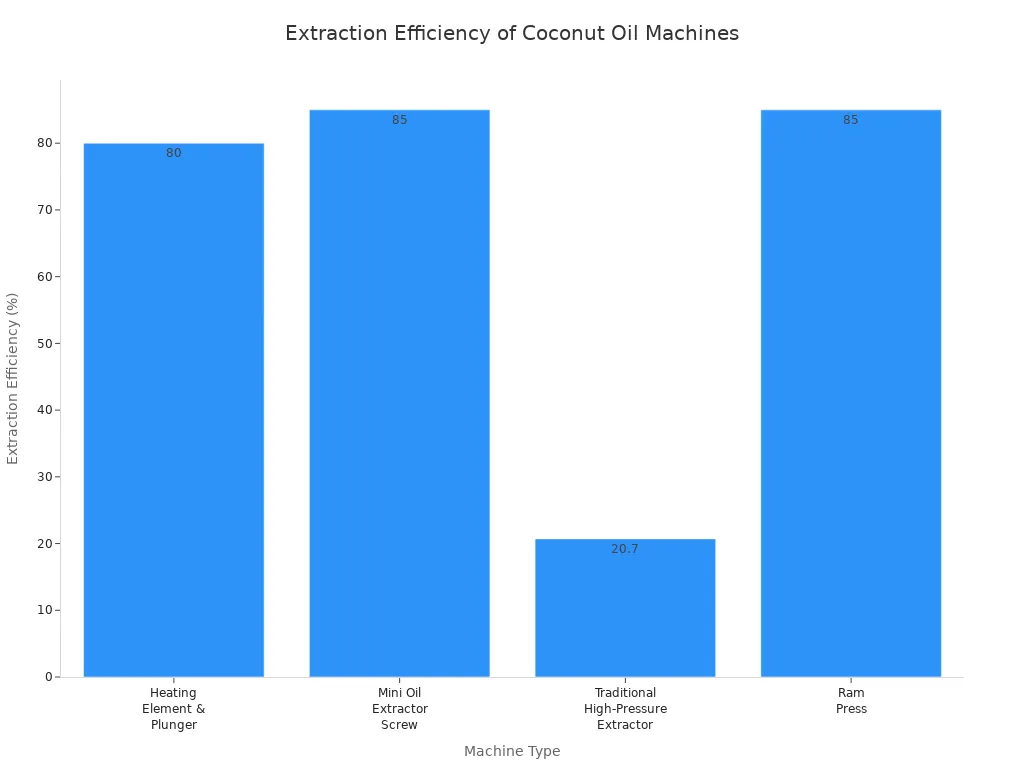
Tip: Machines with built-in heating can help you get more oil out, especially if you process a lot of coconuts.
Capacity means how much coconut you can process in a day. If you run a small shop, you don’t need a huge machine. If you want to grow your business, pick a machine that can handle more. Check the barrel size and make sure it matches your needs. Here’s a quick look at some models:
Model | Processing Capacity (T/24h) | Oil Press Power (Kw) | Weight (Kg) |
|---|---|---|---|
SCO-100 | ≥3.5 | 7.5 | 1023 |
SCO-110 | ≥4.5 | 11 | 1075 |
SCO-120 | ≥6.5 | 15 | 1115 |
SCO-130 | ≥8 | 18.5 | 1320 |
SCO-140 | 9-11 | 18.5 or 22 | 1360 |

If you plan to expand, choose a machine with a bigger barrel size. You’ll save time and money in the long run.
You want your machine to last. The material matters a lot. Stainless steel is strong and resists rust. Cheaper machines might use weak materials. These can break down faster and cost you more in repairs.
“The durability of the machine also depends on the quality of its construction and the materials used. Cheaper machines might use lower-quality materials, which can lead to more frequent breakdowns and a shorter lifespan.”
Look for wear-resisting parts and solid construction. A tough machine means less downtime and fewer headaches.
Temperature control is key for getting high-quality oil. If your machine gets too hot, you lose nutrients and flavor. Cold press machines use less heat and keep the oil fresh. Some machines let you set the temperature so you don’t go above 50°C. This helps you make Virgin or Extra Virgin Coconut Oil.
Aspect | Description |
|---|---|
Temperature Regulation | Maintains oil temperature below 50°C to preserve nutrients, flavor, and aroma. |
Extraction Efficiency | Optimizes the extraction process, leading to improved oil yield efficiency. |
Cold Pressing Mechanism | Involves mechanical pressing without external heat, preserving the quality of the oil produced. |
Cold pressing keeps the good stuff in your oil.
You get better flavor and aroma.
Machines with precise temperature control help you make top-quality oil.
Wet processing uses fresh coconut meat and keeps the oil’s natural flavor. This method gives you 40-50% oil from fresh coconut meat. It’s great for health products and cosmetics.
You want a machine that’s easy to clean and fix. Some brands offer great support. They help with installation, training, and troubleshooting. If you have a problem, you want help fast.
Look for companies that offer after-sales support.
Training and troubleshooting make your life easier.
Reliable support keeps your machines running smoothly.
Cost matters, but you should think about return on investment (ROI) too. A cheap machine might break down and cost you more later. A good machine helps you make more oil and earn more money.
Tip: Calculate how much oil you can make and sell. Compare this to your costs. A smart investment pays off year after year.
You might wonder which type is better. Cold press machines keep more nutrients and flavor in the oil. They use less energy. Expeller machines make more oil but use heat, which can lower quality. Here’s a quick comparison:
Feature | Cold Pressing | Expeller Pressing |
|---|---|---|
Oil Quality | Retains more nutrients and flavors | Yields more oil but may compromise quality due to heat |
Energy Consumption | Lower energy consumption | Higher energy consumption due to heat generation |
Shelf Life | Shorter due to less refinement | Longer due to more refinement and preservatives |
If you want premium oil for health or beauty, go with cold press. If you need more oil and longer shelf life, expeller pressing might work better.
Here’s a quick checklist to help you choose:
High extraction efficiency and oil yield
Barrel size and capacity that match your needs
Built-in heating for better extraction
Strong, wear-resisting materials
Temperature control for quality oil
Cost and ROI that make sense for your business
Integration with your current process
You want coconut oil processing machines that fit your goals and help you grow.
When you look at coconut oil processing machines, check what matters most. Machines are not all the same. Some work better and save you money later. Here are the main things you should check:
Technical specifications and standards
Industry compliance requirements
Performance metrics and benchmarks
Cost-efficiency factors
Quality assurance considerations
Integration capabilities
After-sales support evaluation
Tip: Machines with built-in heating, energy-saving parts, and easy packing line links can help you a lot.
You might ask which machine is best for you. Cold press and expeller machines work in different ways. Here is a simple chart to show the differences:
Feature | Cold Pressed Oil | Expeller Pressed Oil |
|---|---|---|
Extraction Temperature | Low (around 122˚ F) | Higher temperatures used |
Nutritional Quality | Retains antioxidants and Vitamin E | May lose some nutrients due to heat |
Yield | Lower yield, requires fewer nuts/seeds | Higher yield, requires more nuts/seeds |
Health Benefits | Considered healthier due to nutrient retention | Less nutrient-dense compared to cold-pressed |
If you want oil with more nutrients and a fresh taste, pick cold press. If you want more oil and do not mind less nutrition, expeller machines may be better for you.
New machines do more than just press oil. They can connect to other machines and need less help from people. This makes your work faster and easier. Here is how integration and automation help:
Benefit | Description |
|---|---|
Improved Efficiency | You can process more coconuts faster. |
Consistent Quality | The oil is the same every time. |
Reduced Labor Costs | You need fewer workers to run the machines. |
Energy Efficiency | Machines use less power, so you save money and help the planet. |
Waste Minimization | You waste less coconut and oil when making your product. |
AI and robots help machines work with different coconut sizes and make fewer mistakes. Many new machines use less energy and make less waste, which is good for the environment.
You want to start by looking at what your business really needs. Think about how much coconut oil you want to make each day. Do you plan to grow your business soon? Write down your goals. This helps you pick the right machine size and features.
Ask yourself these questions:
How many coconuts do you process daily?
Do you want to make premium oil or just get the most oil possible?
Is saving energy important to you?
Do you need machines that work with what you already have?
Tip: Make a simple list of your must-haves and nice-to-haves. This keeps you focused when you shop for coconut oil processing machines.
Choosing the right supplier matters as much as picking the right machine. You want a supplier who stands by their products and helps you when you need it. Look for companies with a good track record. They should offer training, support, and spare parts.
Here’s a table to help you compare suppliers:
Criteria | Description |
|---|---|
Efficiency of Oil Extraction | The machine must operate at the right pressure to get the most oil without wasting any. |
Quality of Machine Parts | Good parts last longer and keep your machine running smoothly. |
Budget Considerations | Think about the price now and how much you’ll save or earn later. |
Supplier's Experience | Suppliers with more experience often give better support and advice. |
You can ask for references or reviews from other buyers. Try to visit a supplier’s showroom or factory if you can. This gives you a better idea of what you’ll get.
Note: A reliable supplier will answer your questions and help you solve problems quickly.
Taking time to assess your needs and check suppliers helps you make a smart choice. You set yourself up for success and avoid costly mistakes.
When you pick coconut oil processing machines, think about what you want to do. Think about how much oil you need each day. Choose automatic or semi-automatic machines for easier work. Check out new technology and see what is popular in your area. Here is a simple checklist to help you:
Use dry coconuts.
Read the instructions.
Watch the oil come out.
Filter the oil well.
Clean the machine after use.
Tip: Training and regular care help your machines last longer.
Common Mistakes | Solutions |
|---|---|
Skipping maintenance | Plan checkups on a schedule |
Poor training | Teach your team many times |
Forgetting lubrication | Look at oil levels every week |
You do better when you care about quality, work fast, and think about the future.
Cold press machines use low heat. You get oil with more nutrients and flavor. Expeller machines use more heat. You get more oil, but some nutrients may not stay.
You should clean your machine after every use. This keeps your oil pure and helps your machine last longer. Regular cleaning stops germs and buildup.
Some machines let you make both virgin and refined coconut oil. Check the machine’s settings and features. You may need extra steps or tools for different oil types.
Look for machines with emergency stop buttons, shields, and temperature controls. These features protect you and your workers. Good safety design helps prevent accidents.


