

Views: 0 Author: Site Editor Publish Time: 2025-08-12 Origin: Site


The dried mango process transforms fresh mangoes into a delicious, sweet snack. To start the dried mango process, you select ripe mangoes, then wash, peel, and slice them. Next, the dried mango process uses special machines to dry the slices, safely removing moisture. Throughout the dried mango process, it’s important to monitor each step to ensure the mango remains safe and flavorful. In 2023, the global dried mango process resulted in a production volume of 310,000 metric tons, with sliced dried mango being the most popular product.
Dried Mango Type | Production Volume (2023) | Percentage of Total Volume |
|---|---|---|
Sliced Dried Mango | 186,000 metric tons | 60% |
Diced Dried Mango | 46,500 metric tons | 15% |
Dried Mango Powder | 31,000 metric tons | 10% |
Sweetened Dried Mango | 46,500 metric tons | 15% |
Total | 310,000 metric tons | 100% |
Choose ripe mangoes with good color, firmness, and dry matter for the best dried mango flavor and texture.
Wash, peel, and slice mangoes evenly to ensure safe, fast, and uniform drying.
Use pre-treatments like lemon juice soaking or blanching to keep mango color bright and fresh.
Pick the right drying method—hot air, sun, or heat pump—to balance drying speed, nutrient retention, and quality.
Cool dried mango quickly, pack it in airtight containers, and store it in a cool, dry place to keep it fresh and tasty for months.
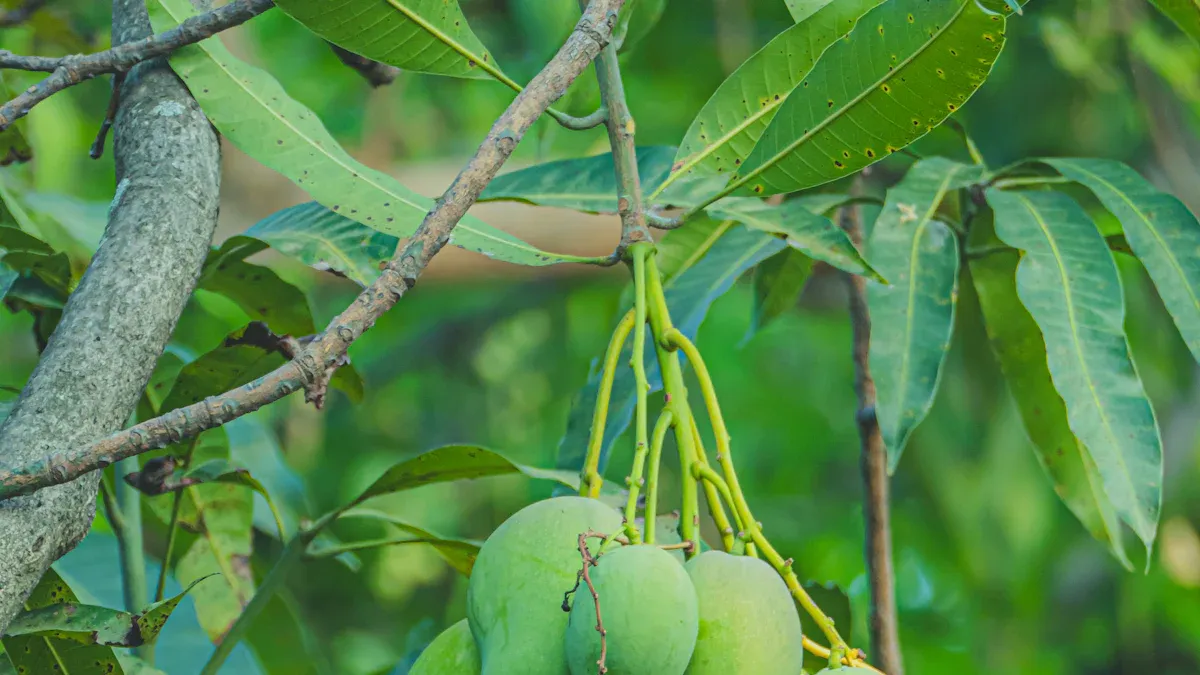
You begin the dried mango process by picking mangoes that are mature. Mangoes at the green-mature or yellow-point stages are best for drying. A portable fluorimeter can check the right fluorescence range. Expert pickers also know how to choose mangoes that meet export rules. After picking, you watch the color, texture, and smell. This helps make sure the fruit ripens enough before drying.
Fruit density is important for finding good mangoes to dry. Mangoes with higher density at the green-mature stage will taste sweeter and smell better when ripe. You want a density difference of at least 0.03-0.04 g/mL to notice these traits. Dry matter content (DMC) is also important. Mangoes with more DMC have more soluble solids and better flavor. For example, 'Palmer' mangoes need at least 137-145 g/kg DMC. 'Tommy Atkins' needs 144-153 g/kg. These numbers help you pick mangoes that will make tasty dried fruit.
Tip: Always look at the inside color and firmness. These signs show if the mango is ready for drying and will give you the best texture and taste.
You must sort mangoes to remove any bad or damaged fruit before starting the dried mango process. First, screen and clean the raw mangoes to get rid of dirt and pesticides. Use good ways to receive and store mangoes so they stay fresh.
When sorting, check the shape and outside look. Also, check for latex. Look at how mature and ripe the fruit is. Measure the Total Soluble Solids (TSS) to judge flavor and quality. Test the firmness to make sure the texture will be good after drying.
Wash mangoes well.
Look for defects or damage.
Check ripeness and inside color.
Measure TSS and firmness.
Take out any fruit that does not meet standards.
By doing these steps, you make sure only the best mangoes go on in the dried mango process. This helps you make dried mango that tastes great, has good texture, and is safe to eat.
You begin by washing mangoes to get rid of dirt and chemicals. Clean mangoes are very important for safety and taste. Washing takes place in a special area to stop germs from spreading. There are different ways to clean the fruit:
Brush roller washing machines use spinning brushes and strong water sprays to scrub mangoes.
Spray washing machines use powerful water jets to wash off things on the surface.
Combined washing machines use air bubbles and brushes together for a deeper clean.
Soaking washing machines dip mangoes in water to reach dirt in small spaces.
Mangoes are often washed more than once. First, brushes and cleaners take off soil and bits. Then, you rinse the fruit with safe, clean water. For the last rinse, you use sanitizers like chlorine, peroxyacetic acid, or acidified sodium chlorite. The water pH should stay between 6.5 and 7.0 so the sanitizer works well. The water must be cooler than 40°F (4.4°C). Sometimes, you use mild soap and warm water before sanitizing. Always use good water that is clean and has no germs.
Tip: Washing the right way keeps dried mango safe and tasty.
After washing, you peel the mangoes. Taking off the peel helps the mango dry faster and look nicer. Next, you cut the mangoes into even slices. All pieces should be the same thickness. This makes sure every slice dries at the same speed. It stops some pieces from being too wet or too dry. This step changes how chewy or crispy the dried mango will be.
You can use big slicers to cut quickly and evenly. Even slices help keep the taste and shelf life the same. Before drying, you might dip the slices in citric or ascorbic acid. This stops the mango from turning brown and keeps the color bright.
Peeling and slicing the same way each time:
Makes drying faster
Makes the mango look better
Helps all pieces dry evenly
Lets the mango last longer
Note: Careful peeling and slicing help make great dried mango.
Before you dry mango slices, you need to use pre-treatment steps. These steps help keep the mango looking bright and tasting fresh. You can choose from several methods, each with its own benefits.
You can soak mango slices in solutions like lemon juice or citric acid. This step helps stop the fruit from turning brown. When you use lemon juice or citric acid, you keep the mango’s color bright and appealing. Studies show that these treatments help the mango keep its lightness and vivid color. They also make the dried mango more attractive to people who eat it.
Blanching is another common method. You dip mango slices in hot water for a short time. Blanching helps reduce color changes and kills some germs. It also causes only a small loss of vitamin A. However, blanching can change how the mango feels when you eat it after drying. Most people do not notice big changes in taste or texture, but the color stays better with acid soaking.
Tip: If you want the best color, use lemon juice or citric acid before drying. This step makes your dried mango look and taste better.
You can also dip mango slices in sugar syrup or a solution with preservatives. This step does two things. First, it adds sweetness to the mango. Second, it helps the fruit last longer by stopping germs from growing. Some producers use ascorbic acid or metabisulphite in the solution. These help keep the mango from browning and keep it safe to eat.
Here are the most common pre-treatment steps:
Soak slices in lemon juice or citric acid to keep color.
Blanch slices in hot water to kill germs and slow browning.
Dip slices in sugar syrup or preservative solution to add sweetness and protect quality.
By using these pre-treatments, you make sure your dried mango keeps its bright color, good taste, and stays safe for longer.
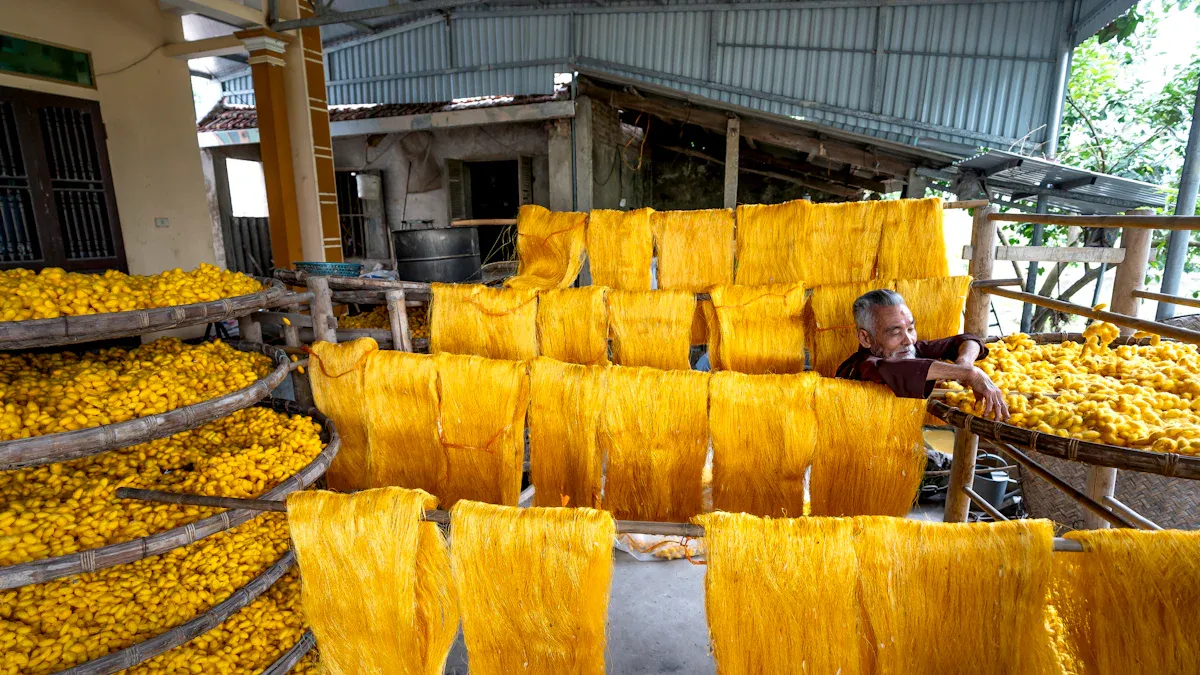
Drying is a key step in the dried mango process. You use different ways to take water out of mango slices. Each way changes how the mango tastes, feels, and how healthy it is. Let’s see the main ways to dry mangoes.
Hot air drying is the most used way in the dried mango process. You put mango slices on trays inside a drying room. The machine blows hot air to take out water. You can set the heat and how fast it dries. Most dryers use heat from 30°C to 75°C. The air energy heat pump gives the heat. This way is like natural drying but is quicker and safer.
Here is a table with the main features of mango drying machines:
Parameter | GG-3P | GG-7P | GG-15P | Unit |
|---|---|---|---|---|
Drying temperature range | 30 - 75 | 30 - 75 | 30 - 75 | ºC |
Rated power | 4 | 12 | 21 | kW |
Maximum power | 10 | 18 | 33 | kW |
Temperature control accuracy | ±1 | ±1 | ±1 | ºC |
Capacity | 100 - 200 | 300 - 700 | 800 - 1500 | kg |
Dehydration capacity | 9 | 21 | 43 | kg/h (at 50ºC, 80% RH) |
These machines dry lots of mangoes and keep heat steady. The drying rooms and steel trays help keep mangoes clean and safe. Some dryers use a set heat of 65°C and mix hot air with microwave power. This mixed way dries mangoes faster and keeps them better.
Tip: Hot air drying is easy and cheap, but it can lower vitamin C and color. You can dip dried mango in sugar syrup after drying to make it sweeter and last longer.
Sun drying is the oldest way in the dried mango process. You put mango slices on clean trays or mats and set them in the sun. The sun’s heat slowly takes out water. This way uses no machines and costs little. The heat changes with the weather, usually from 22°C to 41°C. Drying takes more time because the heat is not steady.
Parameter | Sun Drying (Solar) | Oven Drying |
|---|---|---|
Drying Temperature | Variable (22.4°C to 40.7°C) | Controlled (50°C) |
Drying Time | Longer due to variable temperature | Shorter, more efficient drying |
Vitamin C Content | Higher retention (205.4 mg/100 ml) | Lower retention (64.8 mg/100 ml) |
Protein Content | Higher (2.65%) | Lower (1.65%) |
Microbiological Stability | Fungal contamination after 90 days | No contamination after 90 days |
Sensory Attributes | Odor, taste, texture similar; color brown due to non-enzymatic browning | Odor, taste, texture similar; color yellow-brown |
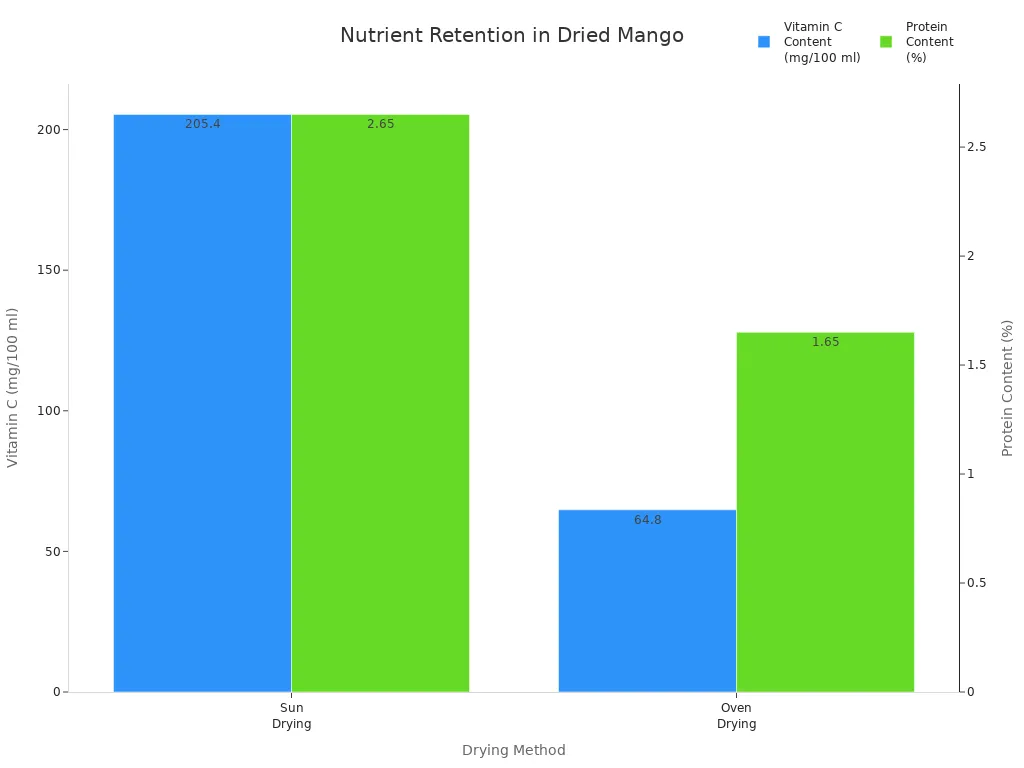
Sun drying keeps more vitamin C and protein in mango. The color turns brown because drying is slow. This way is easy for farmers, but mold can grow if it is humid. You need to cover mangoes to keep out dust and bugs. Sun drying works well for small batches and sunny places.
Heat pump and tunnel drying are new ways in the dried mango process. You use a heat pump dryer to set heat and humidity. The machine saves energy by using heat from the air it blows out. You can set the heat as low as 45°C and change the air speed. This gentle way keeps the mango’s color, taste, and nutrients.
Advantages | Description |
|---|---|
Energy recovery from exhaust | Heat pump dryers can reuse heat from air, saving energy. |
Higher specific moisture extraction rate (SMER) | Removes water better for each unit of energy. |
Improved efficiency / High coefficient of performance (COP) | Uses energy better than regular dryers. |
Controlled drying conditions | Lets you set heat and humidity for better mango. |
Wide range of drying conditions | Can dry many products in different ways. |
Better product quality | Keeps nutrition and taste better. |
Increased throughput and reduced operational cost | Dries faster and saves money over time. |
Energy and time savings | Uses less energy and dries quicker. |
Disadvantages | Description |
|---|---|
Environmental concerns | The energy source and emissions may hurt the environment. |
Regular maintenance required | The system needs care to work well. |
Risk of refrigeration leaks | Leaks can cause problems. |
Higher initial capital cost | Costs more to buy than regular dryers. |
Heat pump drying keeps more vitamins and color than hot air drying. You get dried mango that soaks up water better and has less cell damage. Tunnel dryers work like heat pump dryers but use a long room where trays move through hot air. Both ways dry lots of mangoes quickly and safely. You pay more at first, but you save energy and get better dried mango.
Drum drying is a special way to make mango powder. You spread mango puree on a hot drum. The drum turns and dries the puree into a thin layer. Scrapers take off the dried layer, which you grind into powder. The mango powder has about 5% water. This low water keeps the powder safe and easy to store.
Drum drying is quick and makes fine, even powder. You can use this powder in drinks, baking, or as flavor. The dried mango process for powder is not like making slices or chunks. You do not coat the powder with sugar, but you must keep it dry so it does not clump.
Note: Each drying way changes the nutrition of dried mango. Hot air drying can lower vitamin C by up to 80% and beta-carotene by 40%. Sun drying keeps more nutrients but takes longer and can spoil. Heat pump drying gives the best mix of quality and speed.
The dried mango process uses these ways to lower water, stop spoilage, and keep mango tasty for months. You can pick the best way based on your needs, money, and the quality you want.
You must cool dried mango slices right after drying. Cooling helps stop the slices from getting darker. It also keeps their texture nice and fresh. If you do not cool them, the mango can lose its bright color and taste. Put the dried mango in a clean, cool room with good air flow. This step helps stop bacteria from growing and keeps the mango safe. You should cool the mango to room temperature before packing.
Tip: Cooling dried mango fast helps keep its flavor and color.
Pack dried mango within two days after cooling to keep it fresh. Use airtight containers like glass jars with tight lids or BPA-free plastic boxes. Vacuum sealing is good because it takes out air and keeps moisture away. Add silica gel packets to control humidity and stop mold. Always label each container with the sealing date and where the mango came from. Clear labels help you know how fresh and good the mango is.
Recommended packing steps:
Use airtight or vacuum-sealed containers.
Add desiccants to control moisture.
Store in a cool, dark place between 50-70°F (10-21°C).
Label with date and origin.
Avoid opening containers often.
Keep away from strong odors.
You can put dried mango in the fridge or freezer for long-term storage. This keeps the mango safe and tasty for up to 24 months. Pick packaging like aluminum laminated polyethylene or PET/Al/LDPE with nitrogen to protect nutrients and color.
You can buy dried mango in many places. Supermarkets, hypermarkets, and convenience stores sell it in person. Online stores have lots of choices and make shopping easy. Specialty stores sell organic and premium dried mango. Farmers’ markets and direct sales, like subscription boxes, also offer dried mango. Many companies use both online and offline ways to reach more people.
When sending dried mango, keep it below 70°F (21°C) and away from moisture and heat. This keeps the mango safe and colorful. Export markets have strict rules. You need food safety certificates and cold chain systems. You must use good storage and transport to meet these rules.
YGT Machinery’s mango processing line helps with every step of the dried mango process. The automatic system uses food-grade stainless steel and can be changed to fit your needs. It screens, cleans, peels, dries, sterilizes, cools, and packs mangoes well. You get high-quality dried mango with great taste, color, and long shelf life. The system keeps things clean and safe, so your product is ready to sell anywhere.
You are important in every part of the process. You pick good mangoes and pack them with care. Each step matters for safety and quality. Washing, slicing, drying, and cooling all help protect the mango. New machines like heat pump dryers save energy. Precision slicers help keep more nutrients and work faster.
To get the best dried mango, pick the best fruit. Follow all hygiene steps and use good machines. Always label your mango and store it the right way. This keeps it fresh and safe to eat.
You can dip mango slices in lemon juice or citric acid before drying. This step helps keep the color bright.
Tip: Always use clean tools and work quickly to stop browning.
You should use airtight containers or vacuum-sealed bags. Store them in a cool, dry place.
Glass jars
BPA-free plastic boxes
Vacuum-sealed bags
You can dry mango slices in your oven or in the sun. Slice mangoes thin and lay them on a tray. Set your oven to low heat.
Note: Sun drying works best in hot, dry weather.
Dried mango can stay fresh for up to 24 months if you store it in airtight containers and keep it away from heat and moisture.
Storage Method | Shelf Life |
|---|---|
Airtight container | 12-24 months |
Open container | 2-4 weeks |


