

Views: 0 Author: Site Editor Publish Time: 2025-12-10 Origin: Site


Aseptic Filling is an advanced packaging process used widely in food and beverage industries to package liquid products in a sterile environment. This process ensures products remain free of contamination, significantly extending shelf life and maintaining quality. Technology developments in sensors and automation are driving unprecedented improvements in Aseptic Filling Machine accuracy and waste reduction — innovations that are critical for modern production lines aiming for high efficiency, consistency, and compliance with stringent regulatory standards.
In this comprehensive article, we explore how sensor technology enhances Aseptic Filling performance by monitoring key variables in real time, controlling filling volumes, minimizing wastage, and ensuring product integrity.
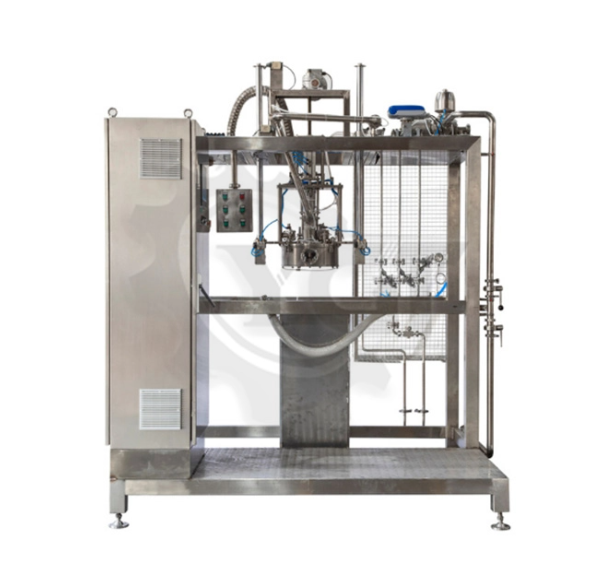
Aseptic Filling refers to a sterile packaging process that involves sterilizing both the product and its packaging separately before filling them in a closed environment. The goal is to eliminate the risk of contamination so products remain safe, stable, and durable without additional preservatives or cold storage.
An Aseptic Filling Machine typically involves multiple stages:
Pre‑sterilization of Containers – ensuring no microorganisms remain.
Filling in a sterile environment – using sensors and automation for controlled precision.
Sealing or closure – immediately after filling to maintain sterility.
Quality Control and Output – using sensors to verify product volume, detect anomalies, and assure compliance.
Table 1 highlights the key differences between traditional filling and Aseptic Filling:
| Feature | Traditional Filling | Aseptic Filling |
|---|---|---|
| Sterile Environment | No | Yes |
| Shelf Life | Short | Extended |
| Use of Preservatives | Often | Rarely |
| Sensor Monitoring | Minimal | Extensive |
| Waste Control | Manual / Variable | Advanced / Automated |
The core objectives of an Aseptic Filling Machine are to:
Deliver highly accurate fill volumes
Ensure sterile packaging
Prevent overfilling or underfilling
Maintain consistency across production batches
Accuracy directly impacts product quality, material usage, regulatory compliance, and cost efficiencies. For example, an overfill by even 1% (e.g., filling a 1‑liter beverage 10 milliliters over target across millions of units) can result in hundreds of kilograms of wasted product and significant revenue loss.
| Metric | Description |
|---|---|
| Fill Precision | Degree to which fill volume matches target |
| Standard Deviation | Variation in fill volumes |
| Waste Percentage | Volume difference resulting in rejected products |
| Sensor Error Rate | Frequency of incorrect readings |
Advanced Aseptic Filling solutions can achieve fill accuracy margins as tight as ±0.05% through servo control, sensor feedback, and real‑time process validation.
In modern Aseptic Filling machines, sensor technology plays a foundational role in monitoring and controlling the process. These sensors measure variables such as flow rate, pressure, temperature, fill volume, and fluid properties.
Flow sensors, including electromagnetic flow meters, ensure precise measurement of liquid passing through the filling heads. This significantly improves accuracy and reduces material waste by stopping the fill at exact points.
Key benefits include:
Real‑time volume verification
High repeatability over millions of cycles
Instant detection of system drift
Some advanced Aseptic Filling Machines employ weighing systems to measure the mass of containers before and after filling. These systems provide highly accurate feedback for calibration and process adjustments, ensuring true fill targets are met.
Pressure and temperature influence fluid dynamics, especially in products with viscosity variations. Sensors monitor these parameters to ensure consistent conditions during filling, preventing volume discrepancies caused by thermal or pressure-related expansion/shrinkage.
To maintain aseptic conditions, cleaning sensors verify the completeness of sterilization cycles, ensuring that each portion of the Aseptic Filling Machine meets hygiene requirements before use. These sensors reduce the risk of contamination and unplanned downtime.
Optical or vision sensors detect the absence of foreign particles, improper seal application, or fill level deviations. These systems automate quality control and reduce manual checks, thereby cutting waste from defective products.
Sensor technology contributes to filling accuracy in several ways:
Sensors provide continuous measurement of key process variables. This real‑time data allows the Aseptic Filling Machine to adjust pumps, valves, and fill heads immediately when deviations occur.
Instead of relying on manual adjustments, modern machines use sensor readings to calibrate themselves during production. This maintains high accuracy even when product characteristics like density change.
Closed‑loop feedback systems constantly evaluate sensor data and correct filling parameters without human intervention. This ensures consistent fill volumes and minimizes the chance of overfill or underfill.
By analyzing trends in sensor data, systems can predict faults before they occur — reducing downtime and avoiding waste caused by equipment failures.
To understand the value of sensors quantitatively, consider this example:
| Scenario | Fill Target | Mean Fill | Standard Deviation | Waste % |
|---|---|---|---|---|
| Without Sensors | 1000 mL | 1005 mL | ± 10 mL | 3.5% |
| With Sensors | 1000 mL | 1000 mL | ± 1 mL | 0.5% |
Result: Implementing advanced sensors in an Aseptic Filling Machine can reduce waste by over 85%, with substantial savings in materials and higher throughput.
| Technology | Accuracy Impact | Cost | Typical Use |
|---|---|---|---|
| Electromagnetic Flow Meters | High | Medium | Liquid flow precision |
| Gravimetric Weighing | Very High | High | Batch validation |
| Pressure/Temperature Sensors | Moderate | Low | Environmental stability |
| Vision Detection | High | Medium | Fill level and defect detection |
| CIP Sterility Sensors | Critical | Medium | Hygiene verification |
Notes:
Machines with feedback from multiple sensor types tend to provide the best overall accuracy and waste reduction.
Sensor integration requires careful design to avoid latency or noise in high‑speed operations.
By minimizing overfilling and rejecting fewer containers, sensor‑driven machines waste less product — directly lowering production costs.
Real‑time adjustments mean fewer machine pauses for recalibration and improved uptime.
Sensors support data logging and traceability — critical for compliance in food, beverage, and pharmaceutical industries.
Accurate and sterile filling ensures product integrity and customer trust.
Before we wrap up, let’s examine what’s next for Aseptic Filling Machine technologies:
AI-enhanced sensors can detect subtle patterns that escape traditional systems, enabling more proactive maintenance and adaptive filling strategies.
Networked sensor platforms allow remote monitoring, predictive alerts, and advanced process optimization.
Integrated sensors that combine flow, weight, and imaging data offer holistic insights for better decision‑making.
Sensors are undeniably transforming Aseptic Filling by enhancing accuracy, automating process control, diminishing waste, and ensuring regulatory compliance. Modern Aseptic Filling Machines leverage sophisticated sensor suites — from flow meters to vision systems — to make sterile filling both efficient and highly reliable.
Whether you manufacture beverages, pharmaceuticals, or medical consumables, adopting sensor technology is essential to stay competitive, reduce costs, and deliver consistent, high‑quality products.
Sensor technology enables precise monitoring of fill levels and detects deviations in real time, preventing overfilling and reducing product rejection rates.
Flow meters, weight sensors, pressure/temperature sensors, and optical sensors are among the most critical for ensuring high‑accuracy filling and process control.
Yes, continuous sensor data provides traceable records that help meet strict hygiene and filling regulations, notably in the pharmaceutical and food industries.
They have higher upfront costs but often deliver significant long‑term savings through waste reduction, improved yields, and lower labor requirements.
Yes, regular calibration and inspection of sensors ensure ongoing performance and prevent drift that could affect accuracy or quality.


