

Views: 0 Author: Site Editor Publish Time: 2025-11-17 Origin: Site


Choosing the right Aseptic Filling Machine helps keep your product safe. It also protects your customers. You must pick a machine that fits your product type. You also need to think about how much you want to make. This choice affects how safe your product is. It also affects how well your production line works. In the pharmaceutical world, you must be careful with things like vaccines and biologics. Food and beverage companies also need sterile packaging. This keeps their products safe and fresh.
Evidence Description | Impact on Product Safety and Efficiency |
|---|---|
The pharmaceutical sector is a key growth driver, with rising demand for sterile injectables, vaccines, biologics, and nutraceuticals. | Aseptic filling machines are important for handling very sensitive products. They help keep products safe and accurate. They also help meet strict international quality rules. |
The aseptic automatic filling machine market is growing as industries want more sterile packaging. This helps products last longer and keeps people safe. | There is a lot of demand in food, beverage, and pharmaceutical areas. These places need to control contamination to follow rules and protect their brand. |
Regulatory groups want you to lower the chance of contamination.
Many companies now use isolator contained filling systems to make things even safer.
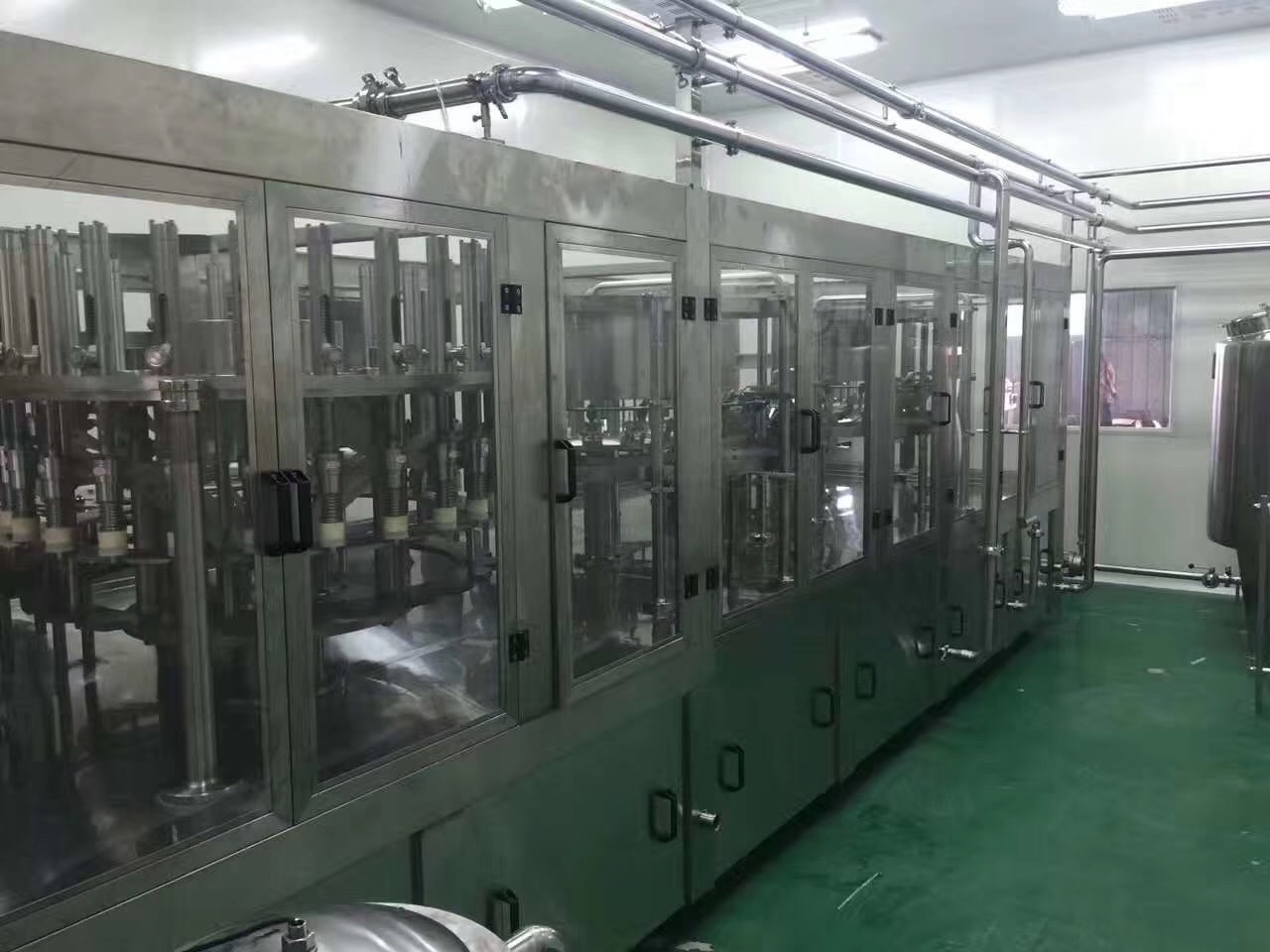
Pick an aseptic filling machine that works with your product type and viscosity. This helps the machine run well and stops clogs.
Think about how much you need to make. Choose a machine that can fill enough units each hour for your business.
Make sure your containers fit the filling machine. The right fit stops leaks and keeps your product clean.
Focus on filling accuracy to keep your product good and safe. Accurate filling means less waste and helps customers trust you.
Look at suppliers for reliability and support. A good supplier gives training and helps with maintenance for long-term success.
Before you pick an Aseptic Filling Machine, look at your product. Different products need different machines. You might fill vials, ampoules, syringes, or cartridges. Some machines fill liquids like vaccines, injectable drugs, dairy, or juices. Each product type needs special care.
Viscosity is also important. Some products are runny, but others are thick or sticky. The Aseptic Filling Machine must work with both kinds. Machines with special fill heads and nozzles help with thick products. Thick products may need slower filling to be accurate. Some machines use heat or cold to help control viscosity.
Tip: Make sure your machine matches your product’s viscosity. This stops clogs and keeps your line working well.
You might have problems matching machines to your product. These problems can be different viscosities, particles, or pH levels. The table below shows some common problems and what they mean for your line:
Challenge | Description |
|---|---|
Product Characteristics | Things like viscosity, particles, and pH that affect which filling machine you need. |
Production Volume | The amount you need to make should match the machine’s speed for best value. |
Container Type | The machine should work with different bottle shapes, sizes, and materials. |
Budget & Supplier | Think about the first cost and how much it costs to keep the machine running. |
Think about the containers you use. Aseptic Filling Machines work with vials, bottles, and cartons. The right machine must fit your container’s size, shape, and material. If you use the wrong machine, you could get leaks, cracks, or germs in your product.
Some products, like biologics, can react with some container materials. This can let chemicals into the product and make it unsafe or less stable. Make sure your container stays sterile during and after filling. This keeps germs out. It is also important to keep the container closed tight, even if the temperature changes.
Aseptic Filling Machines keep products safe by blocking germs before, during, and after sealing.
Sterilizing the product and container separately makes things safer and lowers mistakes.
Using strong, good materials helps your machine last longer and work better.
Note: Some containers, like BFS and closed vial technology, lower the risk of germs much more than open containers. They can cut contamination by over 100 times.
Filling accuracy is very important in Aseptic Filling. Each container must get the right amount of product. This keeps your product safe and helps you follow the rules. The ISO 13408-2:2018 standard gives steps for checking and controlling filling accuracy. Following this standard helps your process stay reliable.
New machines can fill each vial or syringe almost exactly the same every time. Automated systems help stop overfilling. This saves money, especially with costly drugs. Some machines check the weight of every unit to make sure the fill is right.
Filling accuracy keeps your product high quality.
Filling accuracy helps you save money and avoid waste.
Filling accuracy helps you follow food and drug safety rules.
Filling accuracy helps customers trust your product.
Filling accuracy lowers the chance of recalls or safety problems.
Filling accuracy helps your brand look good.
Filling accuracy makes your line work better.
Alert: Always check filling accuracy. Even small mistakes can cause big safety, cost, or rule problems.
You need to make sure your production line fits your business goals. First, check how many units you need to make each day and hour. If your business is small, you might need a machine that fills 500 to 5,000 units every hour. Medium-sized lines usually need to fill 5,000 to 20,000 units per hour. Big production lines can fill up to 100,000 units in one hour. The table below shows how many units each type of line can fill:
Scale | Production Capacity (units per hour) |
|---|---|
Small-scale | 500 to 5,000 |
Medium-scale | 5,000 to 20,000 |
Large-scale | 20,000 to 100,000 |
Pick automated filling machines that match your speed needs. This helps you keep up with orders and keep your products good. Fast machines also help you follow gmp rules by moving products quickly and not letting them sit too long.
Automated filling machines are important for your production line. You can choose semi-automatic or fully automatic machines. Fully automatic machines help you save money on workers. They also make your line faster and help stop mistakes. Here are some good things about using automation:
Fully automatic filling machines help you spend less on workers.
These machines make your work faster and keep quality the same.
In 2023, most companies used fully automatic machines because they are fast and work well.
Automated filling machines help you follow gmp rules. They also make your line more accurate and safer.
Your budget affects what kind of production line you can have. Automated filling machines have many prices. Some small machines cost less than $2,000. Big, fast machines can cost more than $100,000. The chart below shows the price range for different machines:
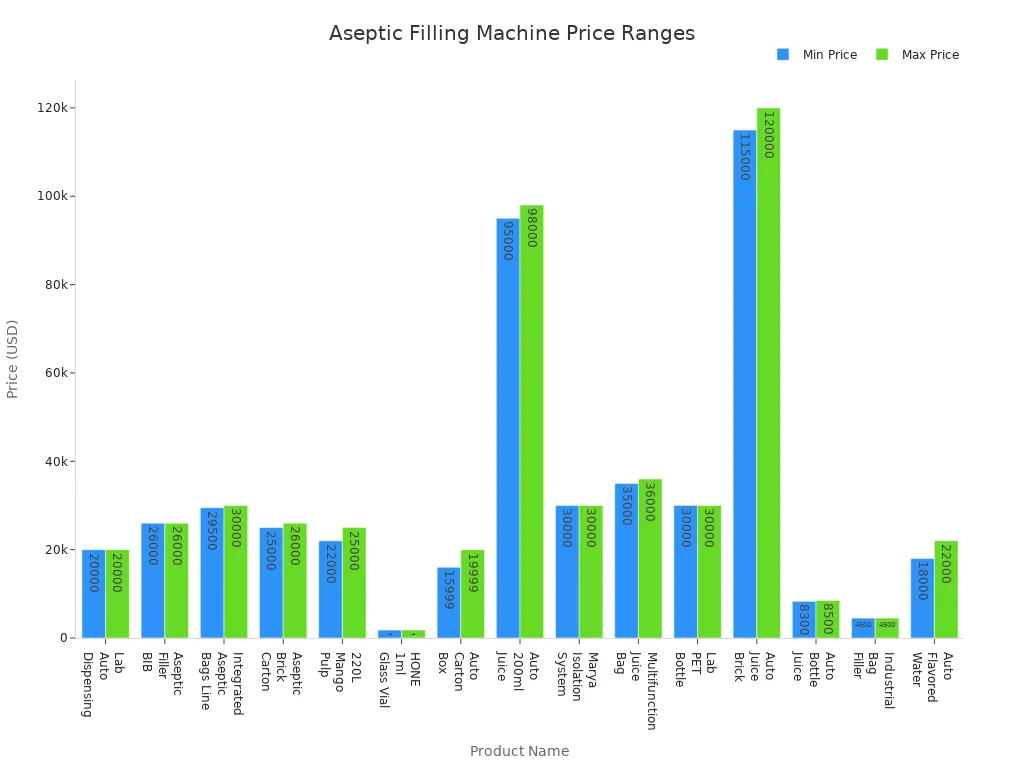
You should think about your budget, how fast you need to work, and the quality you want. Buying the right machine can help you be more accurate, work faster, and follow gmp rules. This helps you make safe, high-quality products at the speed you need.
You must check if your aseptic filling machine fits your line. Adding a new machine should not cause problems. It needs to work well with your other equipment. If machines do not match, your line can slow down. You might need to do extra steps. Many companies have trouble upgrading old machines. Old machines may not connect with new ones. You may need to teach your team how to use new technology. This can take time and cost money.
Tip: Always make sure your new machine connects with your conveyors, cappers, and labelers. This helps you avoid waiting and keeps your line moving.
Some problems you may face when you upgrade your line are:
Machines that cannot change for new needs.
Following strict rules and standards.
Needing special training for workers.
High costs for new technology.
You can fix many problems by picking machines with modular designs. Modular systems let you add or remove parts when you need to. This makes your line easier to change and upgrade.
Your business may get bigger or change. You might want to fill new products or use new packaging. Flexible aseptic filling machines help you change fast. You can switch bottle sizes or product types without buying a new system.
Manufacturers use different ways to make their lines ready for the future:
Strategy | Description |
|---|---|
Modular Systems | Lets you upgrade or change parts for new needs. |
Automation Technologies | Makes your line faster and easier to change for new products. |
Ready-to-Use (RTU) Packaging | Helps you start new products quickly and get them to market faster. |
Custom designs and modular construction help you get ready for changes:
Design Feature | Benefit |
|---|---|
Customizable Designs | Lets you handle many product types and packaging styles. |
Modular Construction | Lets you change your setup as your business grows or changes. |
Note: Planning for flexibility now saves you time and money later. You can meet new market needs without big delays or extra costs.
It is important to focus on key aseptic design features. These features help keep your production line safe. Modern aseptic filling machines use special air filters. These filters take out bad particles from the air. Controlling temperature and humidity keeps the room stable. You can connect different machines for smooth work. Anterooms let workers put on gowns before entering clean spaces. You can add things like sinks, laminar flow hoods, or safety cabinets to help keep things clean.
Advanced air filtration systems
Temperature and humidity control
Connecting equipment together
Anterooms for gowning
Custom add-ons like sinks, laminar flow hoods, and safety cabinets
Cleanrooms are very important in aseptic processing. They stop germs from getting in. Even tiny germs can hurt medicine and people. Cleaning and disinfecting often is a must. You should follow a strict cleaning plan and use approved cleaners. This keeps your space safe for aseptic work and sterilization.
You have to follow strict rules in making medicine. These rules keep products safe and protect people’s health. The table below shows important things you need to control:
Aspect | Description |
|---|---|
Contamination Control Strategy | Controls for germs, toxins, and particles to keep products safe. |
First Air | Clean air touches the product first to stop germs. |
Unidirectional Airflow | Air moves one way to push particles away from key areas. |
Environmental Monitoring | Always checking for particles, temperature, and humidity during important steps. |
Risk Management | Managing risks to stop germs and keep processes strong. |
You should not break the rules. Problems happen if machines are not designed well. Not checking the environment or using bad aseptic methods is risky. If you do not check cleaning or write it down, that is a problem. Using shared machines without controls can spread germs. Always follow rules from groups like the FDA and EMA. This keeps drugs safe and high quality.
Pharmaceutical uses affect how you pick and design aseptic filling machines. You must keep everything sterile at all times. Some products, like biologics, cannot be sterilized at the end. You need to keep the product safe. Complex drugs can break if handled too roughly. Single-use technology helps by lowering cleaning and sterilizing needs. It also cuts the risk of spreading germs and lets you switch products fast.
Aspect | Influence on Design and Selection |
|---|---|
Sterility Assurance | Keeps products sterile to stop germs, especially for biologics. |
Product Integrity | Handles complex drugs gently so they do not get damaged. |
Single-Use Technology | Less cleaning and sterilizing, lowers cross-contamination, and makes switching faster. |
You should use change control to keep your process steady. Stay up to date with new rules. Use quality systems and do regular checks. Build a company culture that follows the rules. This helps you meet all standards and keeps your products safe.
You should pick a supplier you can trust. A good supplier helps you avoid problems. This keeps your line running well. Choose companies that know a lot about aseptic processing. They should have lots of experience. Suppliers must follow rules like ISO 9001, ISO 13485, and CE Marking. Good suppliers watch their work closely. They keep track of all parts, especially those that touch food or medicine. They should give you clear test plans, like Factory Acceptance Tests and Site Acceptance Tests. If a supplier delivers on time and has happy customers, that is a good sign. Training and help after you buy the machine are also important.
Criteria | Description |
|---|---|
Technical Expertise | Proven experience in aseptic processing technology. |
Industry Standards | Compliance with ISO 9001, ISO 13485, CE Marking, and food safety standards. |
Process Control | Ensures quality and consistency in production. |
Material Traceability | Tracks food-contact parts for safety and compliance. |
Validation Protocols | FAT and SAT documentation is essential. |
Reliability Metrics | On-time delivery rates and client testimonials. |
After-Sales Service | Support and training programs for ongoing reliability. |
Service and maintenance help your machine last a long time. Good service lowers repair costs. It also helps your machine work better. Pick a supplier with a strong service team. Local service centers make it easy to get help. Companies like TECH-LONG offer repairs and spare parts. This helps your machine stay in good shape. Some suppliers give regular checks and special plans for your machine. These things help you keep your products safe and high quality.
Regular checks help keep your products safe.
Aseptic checks help your machine work well for years.
Inspection and overhaul services keep your system strong.
Global service teams with local centers make help easy.
Tip: Well-trained workers and clean rooms are very important for safe drug making.
You should think about all the costs, not just the price to buy. The main things to think about are the first cost, running costs, how well it works, new features, and how flexible it is. The table below shows what to look at:
Factor | Description |
|---|---|
Initial Investment | Upfront cost for buying and installing the machine. |
Operating Costs | Expenses for running, maintaining, and staffing the machine. |
Efficiency | Ability to boost productivity and lower labor costs. |
Technology | Advanced features that improve efficiency and reduce contamination risks. |
Flexibility | Ability to handle different products and packaging formats. |
Manufacturers figure out return on investment by looking at savings and extra products made. They compare these to the total cost. For example:
If you save $150,000 each year and the machine costs $200,000, your ROI is ($150,000 / $200,000) × 100 = 75%.
You should look at both short-term and long-term costs. This helps you make the best choice for your line.
You can pick the right aseptic filling machine by doing some important things. First, clean and sterilize your machine. This keeps your products safe from germs. Next, make sure sensors and valves work right. This helps fill each container with the correct amount. Teach your team how to use the machine the right way. This helps stop mistakes and keeps things running smoothly. You should also talk to suppliers you trust. They can help you choose a machine that meets quality rules. They also give you help with problems and service after you buy. Begin by thinking about what your production line needs. Compare what different machines can do. Take steps now to make your filling line safer and better.
Aseptic filling machines keep products sterile while filling. Regular liquid filling machines do not stop germs. Aseptic filling machines help you follow strict safety rules. They also keep your product safe and high quality.
Some aseptic filling machines work with vials and bottles. You need to check if your machine fits both types. This lets your line stay flexible and change when needed.
Powder filling machines put dry products into containers. They do this without letting germs get in. These machines help keep powders clean and safe.
Filling and capping stop germs from getting in. These steps make sure each container has the right amount. They also keep the container closed and safe.
You need special training to use a vial filling machine. Training helps you use it safely and avoid mistakes. It also keeps your line working well.


