

Views: 0 Author: Site Editor Publish Time: 2025-10-21 Origin: Site


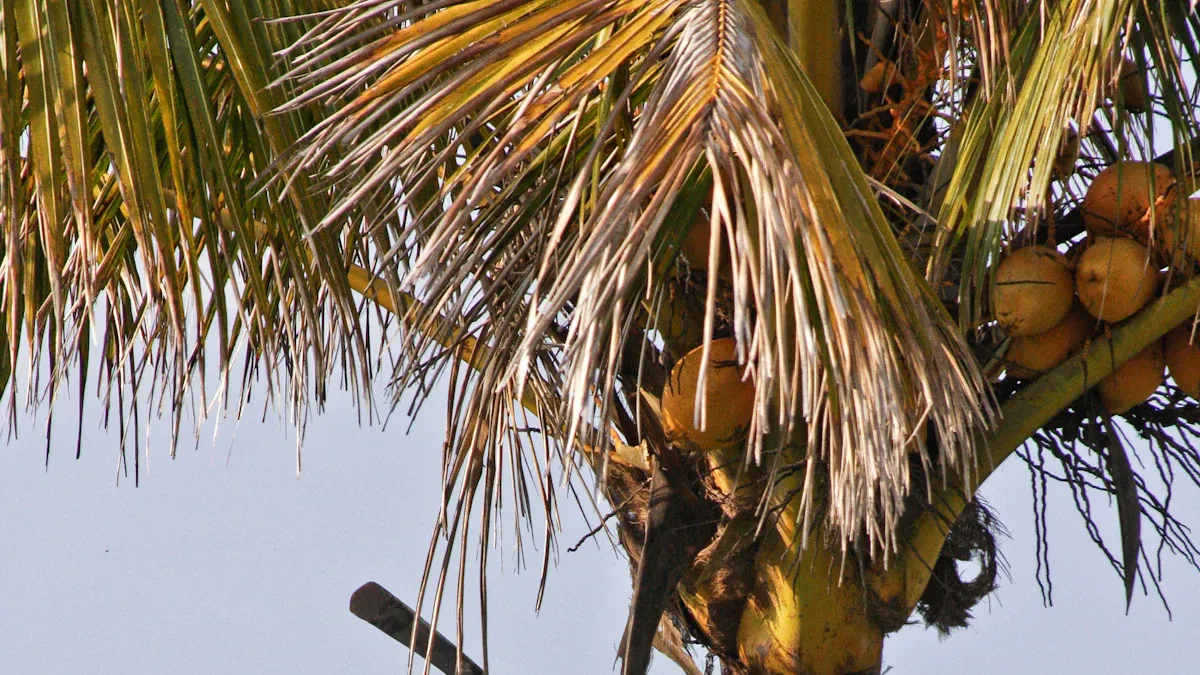
Coconut Processing uses machines to change coconuts into things you use. You might wonder how coconuts go from trees to oil or snacks. They can even become beauty products. This process is important in many countries.
The Coconut Processing market is worth 5.77 billion dollars in 2024. It could grow to 10 billion dollars by 2035. It grows about 5.1 percent every year.
Countries that build this industry make many jobs. They help their economies by making oil, flour, and sugar.
Coconuts give food and water. Their oil is used for cooking and cosmetics. Technology helps you get safe and good coconut products. It also helps with food safety and helps the economy grow.
Coconut processing changes raw coconuts into useful products like oil, flour, and snacks. This helps local economies and gives people jobs.
New technology keeps coconut food safe and good. It uses things like UV-C light and high-pressure ways.
Good farming methods, like crop rotation and organic fertilizers, keep coconut palms healthy. These methods also protect nature.
Checking quality and having food safety certificates are very important. They make sure coconut products follow world rules and earn people's trust.
Using every part of the coconut cuts down on waste. This helps the environment and is good for the industry and the earth.
Coconut processing changes raw coconuts into things people use. Machines and new ways help keep coconut water fresh and safe. Companies use high-pressure and UV-C light to stop coconut water from going bad. These steps help keep the taste and nutrients in coconut water. Coconut processing also makes oil, flour, and snacks. Each step helps make sure the product is safe and good to eat.
The main steps in coconut processing show how a coconut becomes a product. Here is a table that lists each step and what happens:
Stage | Description |
|---|---|
Harvesting | Workers pick coconuts from trees, often by climbing and cutting. |
Dehusking | Machines remove the tough outer layer. |
Deshelling | Workers or machines break the hard shell. |
Soaking | Coconuts soak in water to soften the meat. |
Drying | Dehydrators or ovens remove moisture. |
Packaging | Factories pack the final product for shipping. |
Tip: Each step uses different tools and skills. Technology helps make the process faster and safer.
Coconut processing is important in many countries. When you buy coconut products, you help families and local economies. In Côte d’Ivoire, more than 20,000 families depend on coconuts. Women often do the harvesting and selling. In Papua New Guinea, almost 2.6 million people need coconuts for food and money. The Philippines has 2.5 million coconut farmers. Coconut products are a big part of what they sell to other countries.
Country | Economic Impact | Key Statistics |
|---|---|---|
Côte d’Ivoire | Helps families, women lead in harvesting and selling | 20,000+ families, global market connections |
Papua New Guinea | Main source of money for millions | 2.6 million people, largest Pacific copra producer |
Philippines | Very important to the economy, creates many jobs | 2.5 million farmers, major share of agricultural exports |
You can see coconut processing does more than make food. It helps people earn money and build their communities.
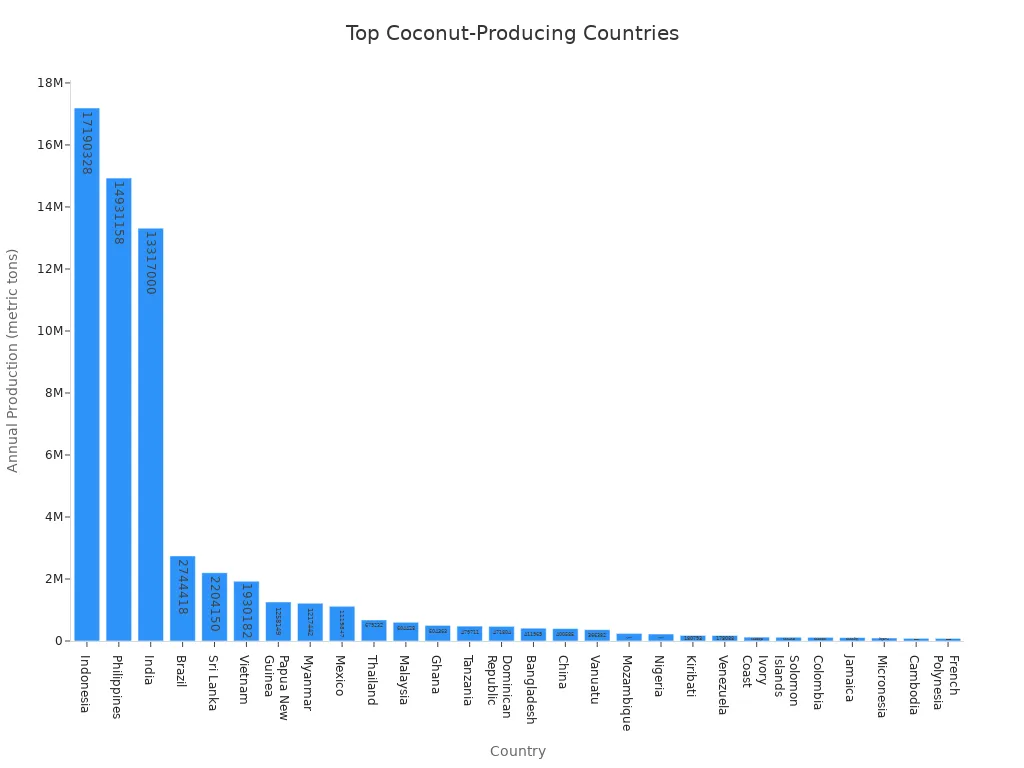
You can find coconut palms in warm, tropical regions around the world. Countries like Indonesia, the Philippines, and India lead in coconut production. These countries grow millions of tons of coconuts each year. Take a look at the table below to see how much each country produces:
Country | Annual Production (metric tons) |
|---|---|
Indonesia | 17,190,328 |
Philippines | 14,931,158 |
India | 13,317,000 |
Brazil | 2,744,418 |
Sri Lanka | 2,204,150 |
Vietnam | 1,930,182 |
Papua New Guinea | 1,258,149 |
Myanmar | 1,217,442 |
Mexico | 1,119,847 |
Thailand | 679,232 |
Farmers use several smart practices to grow healthy coconut palms and get high yields. You might see them keep the area around each tree clean, which helps water reach the roots and keeps weeds away. They plan when to water and fertilize based on the season. Many farmers plant other crops between coconut trees to improve the soil. They also watch for pests and diseases to keep the trees strong. Here is a table showing some common farming practices:
Practice | Description |
|---|---|
Crown and basin management | Keep the area around each tree clean for better water and less weeds. |
Timing and seasonal considerations | Plan watering and fertilizing based on the season. |
Long-term sustainability | Check for pests and diseases to keep trees healthy. |
Mixed cropping systems | Plant other crops between coconut trees to help the soil. |
Nutrition management | Use the right fertilizer at the right time for better growth. |
Water management strategies | Water the trees during important times to get more coconuts. |
Tip: Good farming practices help you get more coconuts and better quality for Coconut Processing.
You can harvest coconuts in a few different ways. Some farmers use long poles to knock coconuts down. This method works fast and keeps workers safe on the ground. Others climb the trees to pick coconuts by hand. Climbing lets you check the tree for pests, but it can be dangerous and might hurt the tree. The time you pick coconuts matters, too. If you harvest at the right moment, you get better-tasting coconut water and higher nutrition.
Pole method: Fast and safe, keeps workers on the ground.
Climbing method: Lets you check for pests, but can be risky and may damage the tree.
Timing: Picking coconuts at the right stage gives you the best flavor and nutrients.
You can see that careful farming and smart harvesting help deliver high-quality coconuts for many uses.
After harvesting, you need to move coconuts quickly to the processing area. You can collect coconuts by hand or use small machines. Workers often gather the nuts into piles before loading them onto trucks or carts. Fast transport helps keep the coconuts fresh and prevents spoilage. If you leave coconuts in the field too long, they can start to mold or lose quality.
You should sort the coconuts during collection. Separate fully matured brown nuts from green or damaged ones. This step helps you get better products later. Many farms use simple tools like baskets or sacks for carrying coconuts. In larger operations, you might see conveyor belts or forklifts. Clean vehicles and containers help prevent dirt and germs from reaching the coconuts.
Tip: Always keep the collection area clean. Clean tools and vehicles help protect the coconuts from contamination.
You must follow careful steps when splitting and cleaning coconuts. These steps help you get high-quality coconut meat for Coconut Processing. Here is a common procedure:
Harvest only fully matured (brown) nuts that are at least 12 months old.
Do not pay for immature (green) nuts. Penalize harvesters who pick them.
Separate any foul nuts from regular ones to avoid mold growth.
Split the nuts and expose the meat only when drying can start right away or within four hours. This prevents mold.
Use mold inhibitors if bad weather threatens during drying.
Keep the drying area clean. Clean the pavement before spreading coconut meat.
Use portable covers to protect coconut meat from rain and dew.
Dry the coconut meat in the sun for four to five days until it reaches 6 percent moisture.
For other drying methods, keep the temperature between 35°C and 50°C for the first 16 hours, then raise it to 50°C until the meat reaches 6 percent moisture.
Test the moisture by pressing the copra between your thumb and forefinger.
You can see that each step helps keep the coconut meat safe and clean. Good splitting and cleaning practices lead to better products and less waste.
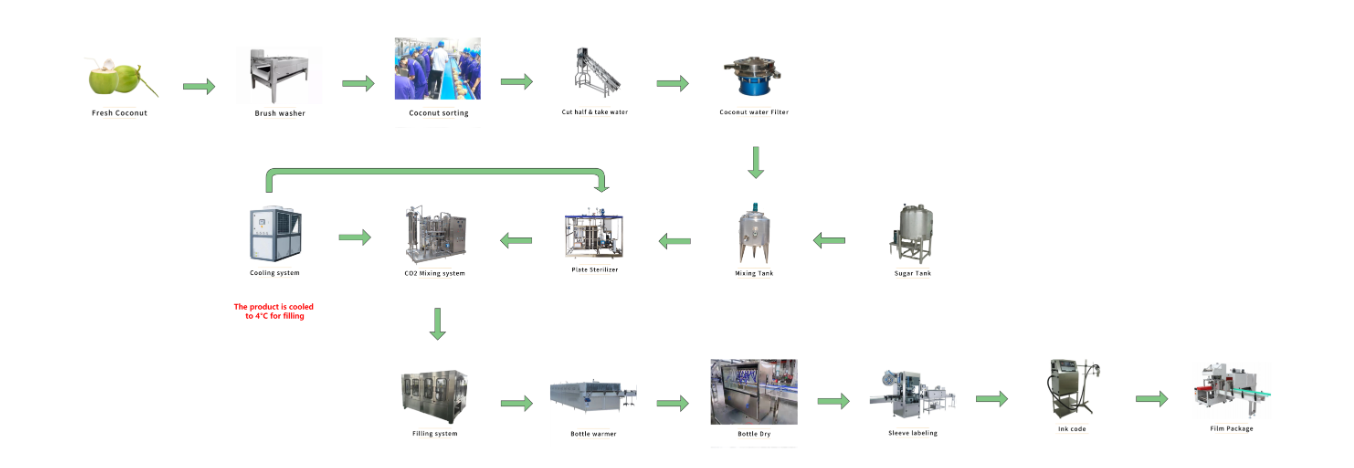
You can make useful products from coconuts in three main steps. These steps are drying, extraction, and grading. People used to do these steps by hand. Now, machines help make the process better. Each step changes how good and safe the coconut products are.
Coconut meat must be dried to make things like copra. Drying takes out water and stops the meat from spoiling. There are different ways to dry coconut meat. Each way has good and bad points.
Drying Method | Efficiency | Product Quality |
|---|---|---|
Sun Drying | Needs little money, but can spoil easily and quality changes | Works in good weather, but some nutrients are lost from sunlight |
Kiln Drying | Not too expensive, makes good copra | Makes good copra, gives the same results each time |
Smoke Drying | Old way, but not very good | Quality changes, can get dirty or unsafe |
Sun drying is cheap and easy, but it depends on the weather. It can give uneven results. Kiln drying lets you control the process and get better products. Smoke drying is an old way, but it can make the coconut dirty.
Note: New drying machines dry coconut meat fast and evenly. These machines work by themselves and do not need good weather. They help make safer and better products.
Drying methods have changed over time:
Sun drying needs lots of work and depends on the weather.
Modern dryers use machines to save energy and make better products.
New dryers keep the coconut safe from mold and dirt.
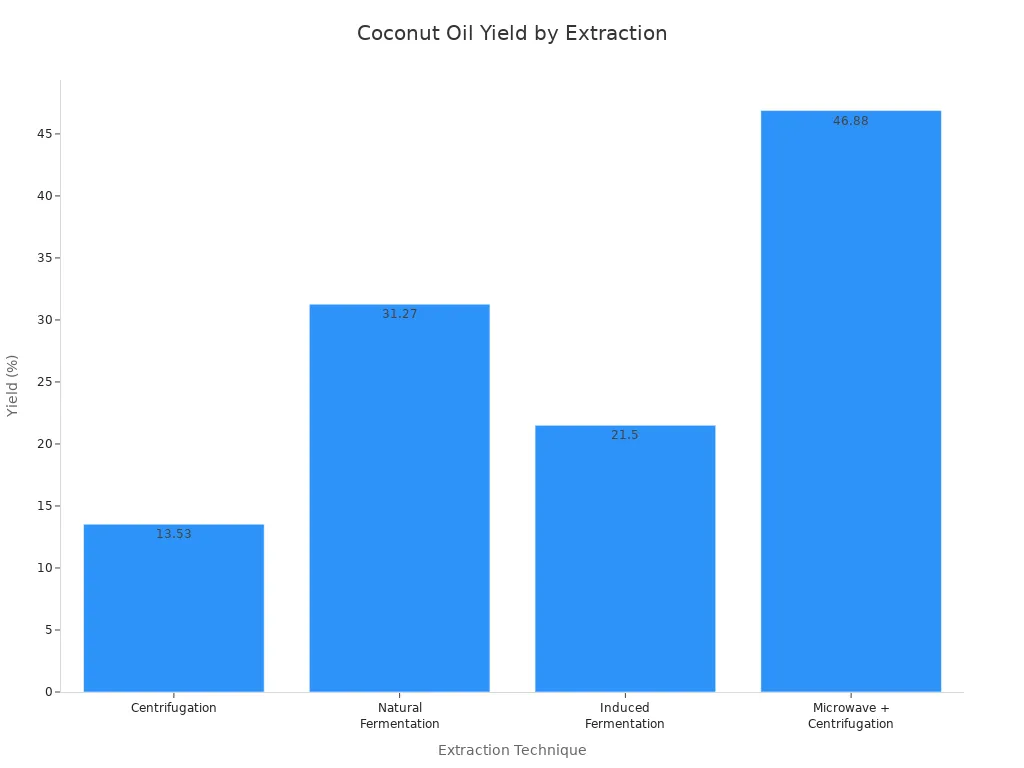
After drying, you need to get oil or other things from the coconut. There are different ways to do this. Each way gives you a different amount and type of product.
Extraction Technique | Yield (%) | Characteristics |
|---|---|---|
Centrifugation | 9.27% (15 min) | More time and speed give more oil; best is 13.53% at 120 min, 12,000 rpm, 40 °C. |
Natural Fermentation | 30–31% | Cheap and keeps nutrients, but takes a long time; machines can give 31.27%. |
Induced Fermentation | 21.5% | Uses tiny living things; takes 1-2 days, can lower oil quality. |
Microwave + Centrifugation | 46.88% | Uses both microwave and spinning; gives much more oil with 720 W and spinning. |
You can use machines or chemicals to get oil. Machines give you clean oil with no chemicals. This way is easy and better for nature, but you get less oil. Chemicals help you get more oil, but you must be careful. This way costs more and needs extra cleaning.
Extraction Method | Advantages | Disadvantages |
|---|---|---|
Solvent Extraction | Gets the most oil, so you waste less. | You must be careful with chemicals, which can be risky. |
Works with many types of coconut and can be used in big factories. | Costs more because you need extra cleaning steps. | |
Needs more money to start and keep running. | ||
Mechanical Extraction | Makes clean oil with no chemicals, keeps taste and nutrients. | You get less oil, so you need more coconuts. |
Easy to use and fix, does not need fancy machines. | May not work for all coconuts, especially if oil is hard to get out. | |
Good for the environment because it uses no chemicals. | Heat from pressing can change the oil and make it last less time. |
Tip: Pick your extraction method based on what you want to make and what you have.
You must sort and sift coconut products to make them the same size and quality. Sieving machines help you sort coconut by how big the pieces are. This step makes sure your products are even for food and other uses.
Sieving machines sort coconut into groups by size.
Vibratory and spinning sifters help sort faster and better.
Machines that check as they work help keep the quality the same.
The Codex Alimentarius Standard says there are three sizes for coconut:
Extra-fine
Fine
Medium
Note: New sieving machines help you meet rules and make top-quality products.
These steps help turn coconuts into safe and useful things. You can see that machines make each step faster and more dependable.
Desiccated coconut is used in many snacks and baked goods. Factories make it by cutting and drying coconut meat. Drying takes out most of the water. This helps the coconut last longer and stay safe to eat. You can check if desiccated coconut is good by looking at some things. These include how much water is left, how much fat it has, the size of the pieces, the color, and if it is safe to eat.
Parameter | Standard Range | Impact on Quality |
|---|---|---|
Moisture Content | 2.5–3.0% | Shelf stability, texture |
Fat Content | 60–70% | Flavor, mouthfeel |
Particle Size | Fine to coarse | Application-specific |
Color | White to light cream | Visual appeal |
Microbiological | <1000 CFU/g | Food safety |
Tip: Keep desiccated coconut in a cool, dry place. This helps it stay fresh.
Coconut oil is the biggest product made from coconuts. It makes up about 40% of the market’s value. There are different kinds of coconut oil. Each kind is made in a special way. Virgin coconut oil comes from fresh coconut meat and tastes natural. Raw coconut oil uses organic coconuts and is good for your health. Centrifuge coconut oil is made by spinning coconut cream. It is mild and high quality. Cold pressed coconut oil is made from dried coconut meat and keeps more nutrients. Expeller pressed oil uses heat and pressure, so it does not taste as strong. Fermentation processed oil uses grated coconut meat and lets it ferment naturally.
You can also get coconut oil from wet milling or quick drying. Each way gives a different taste and quality.
Coconut cream makes foods taste rich and creamy. It is used in curries, desserts, and smoothies. Many people use it instead of dairy in vegan recipes. Food companies put coconut cream in ice creams, ready meals, and coffee creamers. You can also buy coconut cream powder. It is easy to store and use in instant foods.
Cooking and baking
Beverages and cocktails
Processed foods and desserts
Note: Coconut cream powder helps companies save money and keep food fresh.
Coconut Processing makes many new products. You can eat coconut chips as a crunchy snack. Coconut flour snacks, like crackers and protein bars, do not have gluten. You can also find coconut yogurts and coconut ice creams in stores.
Coconut chips in sweet or salty flavors
Coconut flour snacks and baked foods
Coconut-based dairy-free foods, like yogurt and frozen desserts
The coconut industry is growing because more people want healthy and natural foods.
You want coconut products to be safe and taste the same. Quality control helps make this happen. In Coconut Processing, you must follow strict rules. These rules keep products safe and high quality. Many factories use a strong system to check quality. This system checks every step, from raw coconuts to finished goods.
Here are some ways to control quality in coconut factories:
Use a strict system to keep product quality steady.
Follow all food safety laws and standards.
Use a good management system to find and fix problems.
Make sure small and medium factories have a quality system.
Check for any issues that could hurt safety or taste.
Tip: Quality control is not just for big companies. Small factories also need strong systems to protect their products and customers.
Food safety is very important when making coconut products. You must meet certain standards to sell in other countries. Many buyers want special certifications before they buy.
Here is a table that shows some common food safety certifications and what they mean:
Certification Type | Description | Importance |
|---|---|---|
ISO 22000 | Makes sure food is made in a clean, safe place | Needed for many buyers in Europe and North America |
HACCP | Finds and controls food safety risks | Lowers recall risk and builds trust |
GMP | Checks that products meet quality rules | Keeps products safe and traceable |
Organic Certification | Shows products are chemical-free | Helps reach health-focused customers |
Halal Certification | Follows Islamic dietary rules | Needed for Muslim-majority countries |
Kosher Certification | Follows Jewish dietary rules | Grows trust and market reach |
BRC or IFS Food | Checks food safety and quality systems | Seen as top standard in food safety |
Note: Getting these certifications helps you sell coconut products around the world. It also keeps your customers safe.
You have to pick the right packaging to keep coconut products safe. Good packaging keeps out bad chemicals, air, and water. It also stops germs and leaks. If you use weak packaging, coconuts can spoil or become unsafe. Many companies now use aseptic processing and packaging. This method makes both the food and the container clean before closing them. It helps coconut water and cream stay safe for a long time without a fridge.
You can use different packaging for each coconut product. Here is a table that shows the best ways to pack coconuts:
Packaging Method | Optimal Temperature | Humidity | Ventilation |
|---|---|---|---|
Whole Coconuts | 0ºC | 50-60% | 10 |
Diamond-Cut Coconuts | Above 2ºC | 50-60% | 10 |
Tip: Always use food-safe, airtight packaging to keep out air and water. Vacuum-sealed bags are great for dried coconut.
You need to store coconut products the right way to keep them fresh. Temperature is very important. Store desiccated coconut between 10°C and 15°C. Keep coconut oil in a cool, dark place so it lasts longer. Fresh coconuts need cool and steady conditions. Do not let them get too hot or they can spoil.
Humidity is also important. Keep the humidity below 65% to stop mold and germs. Use dehumidifiers or air conditioning if you need to. Good airflow helps stop water drops and keeps the air clean. Always use airtight packaging to keep out water and bugs. Vacuum-sealed bags work best for dried coconut.
Store each product at the right temperature.
Keep humidity low and steady.
Make sure the storage area has good airflow.
Use strong, food-safe packaging.
Check for bugs often and keep the area clean.
Note: Doing these things in Coconut Processing helps you give customers high-quality products.
In a modern coconut processing plant, many machines work together. Each machine does a different job. These machines help save time and keep products safe. Here is a table that lists some important equipment and what each one does:
Equipment Type | Function/Importance |
|---|---|
Coconut Milk Extractors | Take out coconut milk fast and keep it clean. |
Coconut Oil Expellers | Press out oil and keep it healthy. Cold-press makes organic oil. |
Deshelling Machines | Take off hard shells quickly and safely. |
Peeling Machines | Peel coconuts of all sizes with less work. |
Dryers | Dry coconut meat for copra and desiccated coconut. Save energy and control water. |
Graters | Shred coconut meat evenly for many uses. |
Slicers and Pulverizers | Cut and crush coconut for snacks and other foods. |
Tip: The right equipment helps you make better products and keeps workers safe.
Automation changes how coconut processing works. Machines now do many jobs people did by hand. You get faster results and better quality. Fully automatic graters give more coconut in less time. They also keep the size the same. Some machines let you choose how fine the coconut will be. Automated feeding systems move coconuts into machines with little help.
Feature | Benefit |
|---|---|
Fully automatic coconut graters | High output and even product quality |
Adjustable grating sizes | More choices for different products |
Automated feeding systems | Less work for people, safer workplace |
New machines use stainless steel blades for better cutting. They are easier to use because of their design. Noise-reduction technology makes the work area quieter. Some shelling machines use AI to check coconut size and shape. This helps remove the shell without breaking the meat.
Innovation | Benefit |
|---|---|
AI in shelling machines | Same quality every time |
Real-time adjustments | Less damage to coconut meat |
Automation lowers labor costs and makes production faster. It also helps make coconut products safer and more reliable. Smart machines help you meet high standards in Coconut Processing.
You help cut down on waste during Coconut Processing. Many coconut parts, like husk and shell, can be reused. They do not have to go to landfills. In Bengaluru, workers take the pith out of tender coconut waste. The pith becomes coco-peat for gardens. The fiber is used to make mattresses or helps hatcheries.
In some areas, farmers and artisans work together. They make eco-friendly products from coconut waste. This teamwork keeps waste away from landfills. It also gives artisans fair pay. Women groups in Ganjam collect coconut husks and shells. They turn these into coir, husk, and cocopeat. People use these by-products to:
Make bricks stronger in factories
Improve soil in nurseries
Make strong ropes
Reinforce sand for building roads
Old coconut shells are made into bowls, candles, cups, planters, coasters, and soap dishes. These creative ideas help manage waste. They also support smart use of resources.
You can help nature by using eco-friendly ways in coconut farming and processing. Many farms now use green methods to lower harm to the planet. Here is a table with some common eco practices:
Practice | Description |
|---|---|
Sustainable farming | Saves forests and helps plant new trees |
Agroforestry | Grows coconuts with native plants to help animals and plants |
Water management | Uses smart watering and collects rain to save water |
Organic fertilizers | Makes soil better without using chemicals |
Waste management | Turns waste into new things and cuts down on pollution |
Consumer awareness | Teaches people to pick organic and fair trade products |
You can also help by recycling coconut waste into green products. Crop rotation and organic inputs keep soil healthy. Agroforestry uses water and energy in smart ways. These steps make coconut farming better for the earth and for you.
You have learned that coconut processing uses smart machines and new ideas. These machines help turn coconuts into many different products. Some new inventions are heat exchangers and aseptic processing. Gentle heat exchange helps make better quality products. You help the industry grow by caring about quality and new ideas. You also help by thinking about the environment.
New technology helps companies find new ways to sell products.
Using all parts of the coconut is good for nature.
Companies work together to make sure there are always enough coconuts.
Remember, it takes skill and care to make every coconut product you use.
You can get oil, milk, cream, flour, and chips from coconuts. Factories use all parts of the coconut. Some coconut parts are used in beauty products too. When you pick coconut-based things, you help cut down on waste.
Store coconut products in a cool and dry place. Use airtight packaging to block out water and bugs. Keep coconut oil away from sunlight so it stays good.
Machines help save time and keep workers safe. They also make sure products are always the same. Modern machines give better quality and make less waste.
Many companies reuse coconut shells and husks. When you buy things made from recycled coconut parts, you help the planet.


