

Views: 0 Author: Site Editor Publish Time: 2025-10-24 Origin: Site


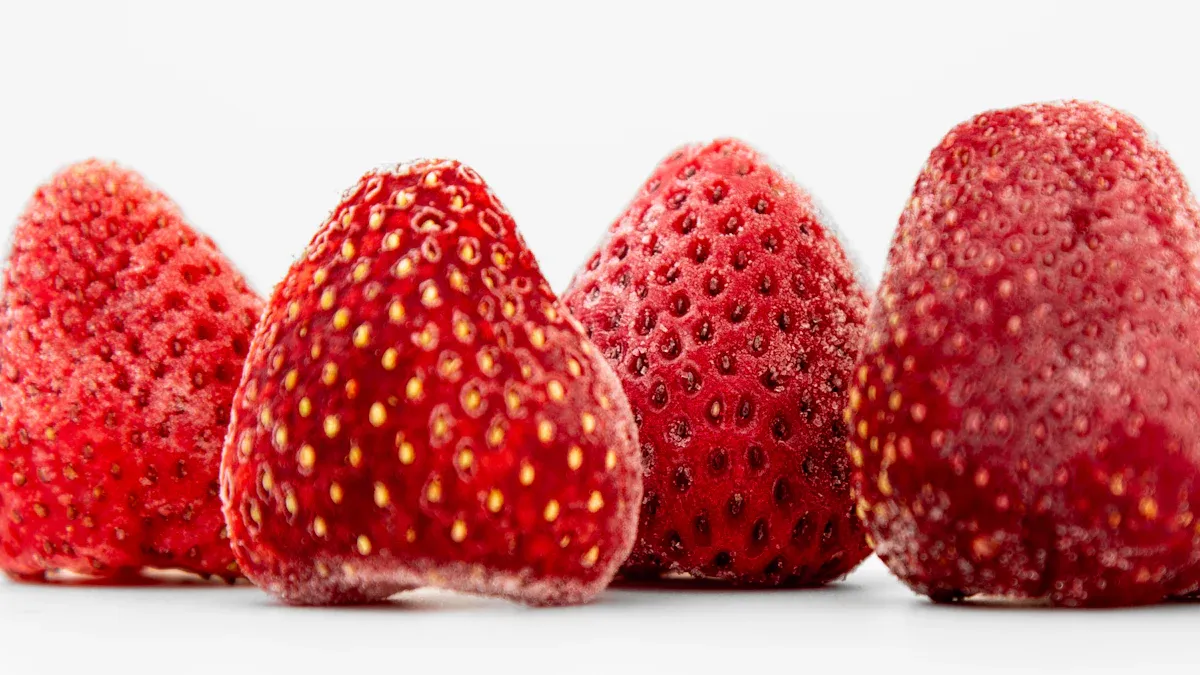
When you open a bag at home, you see frozen strawberries that have undergone a meticulous Frozen Strawberry Processing method to ensure they remain safe and fresh. First, workers carefully pick the best strawberries. Then, they sort and wash the fruit to eliminate any bad parts. Next, they blanch the berries to prevent spoilage. Quick freezing is crucial in the Frozen Strawberry Processing as it helps the berries maintain their shape and vitamins. After that, they are packed and sent out quickly, ensuring the strawberries stay safe until they reach you.
Step | Impact on Quality and Safety |
|---|---|
Harvesting | Picks the best fruit, lowers the chance of germs. |
Sorting | Takes out bad fruit, keeps berries good. |
Washing | Cleans berries, gets rid of dirt and germs. |
Blanching | Stops spoilage, keeps berries good in storage. |
Freezing | Keeps shape, color, and vitamins. |
Packaging | Blocks air and water, keeps berries longer. |
Distribution | Gets berries to you fresh and safe. |
Picking ripe strawberries is very important. Choose firm, all-red berries for good taste and quality.
Washing and sorting strawberries many times takes away dirt and germs. This makes sure only the best berries get frozen.
Quick freezing with IQF technology keeps the shape, color, and nutrients. This way, berries do not stick together and stay good.
Good packaging helps frozen strawberries stay fresh longer. It stops water loss and keeps out freezer burn.
Frozen strawberries can be used in many ways. Put them in smoothies, baking, sauces, or desserts for more taste and nutrition.
Frozen strawberry processing starts with picking ripe strawberries. The berries should be fully red and feel firm. If picked too soon, they will not get sweeter or ripen more. If picked too late, they turn soft and lose their sweet taste. Gently twist each berry off the plant, keeping the green top on. Put the berries in shallow containers so they do not get squished. Take out any berries that look damaged or have mold right away. For the best results, freeze the berries soon after picking. This keeps them fresh and tasting good.
Note: When you pick the berries changes how good they are. Picking early gives firmer, sweeter berries. Picking late makes them more sour and colorful, but less firm.
After picking, you sort the strawberries by size, color, and quality. Only the best berries move on to the next step. You want berries that look clean, have good color, and no mold or rot. For commercial freezing, berries must be at least 5/8 inch wide. No more than 5% of the berries can be smaller, and less than 1% can have mold or rot.
Grade | Criteria |
|---|---|
U.S. No. 1 | One variety, properly washed, well colored, free from mold and decay, not soft or damaged. |
You must also follow rules to protect the environment during frozen strawberry processing. These rules help lower germs and meet laws like those in the eCFR. Good strawberries need to look nice, be clean, and taste good. Many European buyers want food safety certificates like IFS, BRCGS, or FSSC 22000.
Quick freezing is very important in frozen strawberry processing. IQF technology freezes each berry by itself. This stops the berries from sticking together. It also helps them keep their shape, color, and vitamins. By doing all these steps, you make sure people get safe and high-quality strawberries.
Strawberries must be washed many times before freezing. Most companies wash them four or five times with clean water. This step takes away dirt and germs. Each wash lowers the chance of getting sick from the fruit. It also keeps the strawberries safe for you to eat.
Tip: Washing under running water works better than soaking. It gets rid of more dirt and germs on the outside.
During washing, you try to remove things like:
Escherichia coli (E. coli)
Noroviruses
Coliphages
You also wash away leftover pesticides, dust, and tiny bugs. Workers or machines move the berries gently through each wash. This helps keep the fruit from getting bruised. After the last rinse, the strawberries look clean and bright. Now they are ready for sorting.
After washing, you sort the strawberries to pick the best ones. You check their size, color, and ripeness. You also take off any leaves, stems, or dirt that are still on the berries. Sorting can be done by hand or with machines.
Here is a table that shows how sorting works in big factories:
Sorting Method | What It Removes | Technology Used |
|---|---|---|
Manual Sorting | Bruised, soft, or small berries | Workers visually inspect |
Mechanical Sorting | Rotten, unripe, or discolored berries | Optical sorters, conveyors |
Optical Sorting | Mold, foreign materials, stems, insects | Cameras, lighting, software |
Optical sorters use cameras and special lights to find bad berries. Machine learning software helps these machines spot berries that are not good enough. This technology makes sure you get strawberries that look nice and taste good.
Washing and sorting the berries well keeps them safe and high quality. These steps protect you from germs and make sure only the best strawberries get to your table.
You need to prepare strawberries before freezing to keep their best taste and texture. This step helps with preservation and makes sure you get high-quality fruit later. You can choose different ways to prepare the berries:
Pick fully ripe, firm strawberries with a deep red color.
Wash and rinse them with cold water, but do not soak.
Decide if you want to freeze whole, sliced, or crushed strawberries.
Many people use freezing with sugar or freezing without sugar. If you want to keep the natural taste, freezing without sugar works well. If you want to keep the fruit moist and sweet, freezing with sugar is a good choice. When you add sugar, it coats the fruit and helps with preservation. Slicing the berries helps them freeze faster and thaw more evenly. This method works well for sliced or crushed strawberries.
Here is a table that shows how different methods affect the quality of your fruit:
Method | Effect on Quality |
|---|---|
Packing in Sugar | Enhances fruit quality by coating it in sugar, which helps retain moisture and flavor. |
Slicing | Helps with even freezing and quicker thawing. |
You can also use a dry pack or tray pack for unsweetened berries. Packing in water, juice, or pectin syrup helps with preservation and keeps the texture better.
Blanching is another important step for preservation. You heat the strawberries in boiling water or steam for a short time. This process cleans the surface, brightens the color, and helps keep vitamins. Blanching also softens the fruit, so you can pack it more easily.
When you blanch, you stop enzymes that can spoil the fruit during storage. This step is key for preservation because it keeps the flavor, color, and texture safe. After blanching, you need rapid freezing to lock in freshness and quality. With these steps, you make sure your strawberries stay tasty and safe for a long time.
You want to keep strawberries as fresh as possible after harvest. IQF, or Individual Quick Freezing, is one of the best ways to do this. With IQF, you freeze each berry separately. This stops the berries from sticking together in a big clump. You get whole, firm berries when you open the bag.
The IQF process uses very cold air that moves quickly around the strawberries. The air temperature drops to at least -35°C. This fast freezing makes tiny ice crystals inside the fruit. Small ice crystals help the berries keep their shape, color, and taste. You do not get mushy or watery fruit when you thaw them.
Tip: Always store IQF strawberries at or below -18°C (0°F). This keeps them from thawing and refreezing, which can ruin their texture.
You can see why IQF is so popular for freezing strawberries. It gives you berries that look and taste almost as good as fresh ones.
When you freeze strawberries on a large scale, you need to choose the right method. Two main ways are used: IQF and blast freezing. Both methods use very cold air, but they work a bit differently.
Blast freezing uses strong fans to blow cold air over the berries. The air moves at speeds between 1.5 and 8.0 meters per second. The temperature drops to at least -35°C. This method freezes the berries quickly and evenly. Fast freezing is important because it makes small ice crystals. Small crystals protect the fruit’s cells and keep the berries firm after thawing.
Here is a table that shows how IQF and blast freezing compare:
Freezing Method | Texture Preservation | Nutritional Value Preservation |
|---|---|---|
IQF | Superior; prevents large ice crystals, retains firmness, color, and flavor | Higher; minimizes nutrient loss |
Blast Freezing | Less effective; larger ice crystals may cause texture degradation | Good; but slightly lower nutrient retention for delicate items |
You want to use IQF if you care most about texture and nutrition. Blast freezing still works well, but it may not keep the berries as firm. Both methods help you freeze large amounts of strawberries quickly and safely.
When you finish freezing strawberries, you must keep them at a steady temperature. Store them at -18°C or lower. This stops the berries from thawing and keeps them safe to eat for months.
Note: Freezing strawberries quickly and at the right temperature helps you keep their taste, color, and vitamins.
You want packaged strawberries to stay fresh and safe until you use them. Companies use special packaging materials to protect the fruit during storage and shipping. Film packaging plays a key role in keeping strawberries at their best. It helps prevent weight loss and keeps the berries from drying out. When you store strawberries at 0°C with film packaging, you can keep them fresh for 28 days or more.
Film packaging preserves quality and weight.
It extends shelf life and keeps strawberries salable.
It blocks moisture loss and protects against freezer burn.
You can find packaged strawberries in many sizes. Here is a table showing common pack sizes for commercial use:
Pack Size | Dimensions (inches) | UPC Code | Case Pack | Weight (lbs) |
|---|---|---|---|---|
1 lb. | 3.5 x 19.75 x 15.5 | 6-65290-00118-4 | 10 | 8 / 120 |
2 lbs. | 3.875 x 19.5 x 11.75 | 6-65290-00142-9 | 10 | 4 / 160 |
3 lbs. | 4 x 19.5 x 11.75 | 6-65290-00166-5 | 10 | 3 / 152 |
4 lbs. | 3.875 x 19.5 x 11.75 | 6-65290-00176-4 | 10 | 2 / 160 |
8.8 oz. | 3.5 x 19.75 x 15.5 | 6-65290-00137-5 | 10 | 12 / 120 |
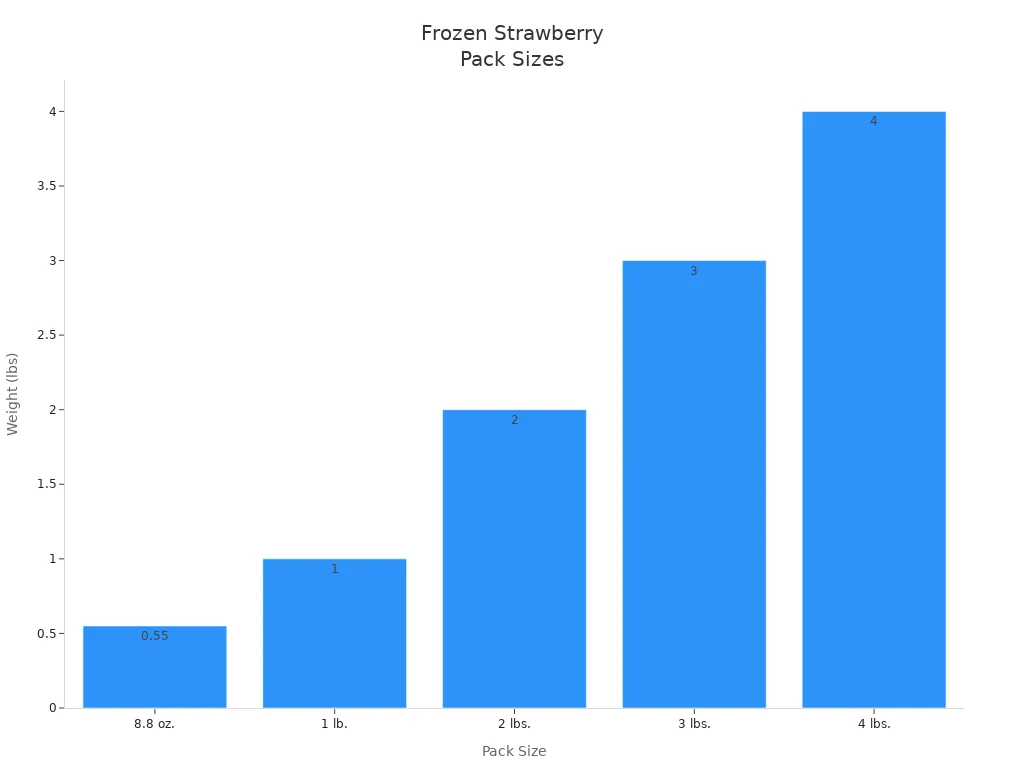
You can choose the right size for your needs, whether you want a small bag for home or a large case for food service.
You need a strong quality control process to make sure packaged strawberries meet safety and quality standards. Every step in the packaging area follows strict rules. Workers check the temperature of the berries and the packaging room. They use equipment made from food-grade materials that do not absorb moisture or bacteria.
Here is a table showing some important quality control steps:
Quality Control Measure | Description |
|---|---|
Good Manufacturing Practices (GMPs) | Procedures that impact the safety of the final product, including equipment, processes, and environment. |
Equipment Standards | Equipment must be non-toxic, non-absorbent, food-grade, and smooth to prevent contamination. |
Sanitation Protocols | Protocols must exist for all production segments to ensure no contamination occurs. |
You also need to follow rules like the Strawberry Marketing Order. These rules help you keep strawberries safe and high quality. The quality control process checks for temperature, cleanliness, and packaging integrity. If you follow these steps, you can trust that your packaged strawberries are safe to eat and taste great.
Frozen strawberries have many uses in the food industry. You can find them in products you eat every day. Here are some common ways you might see frozen strawberries used:
Smoothies: You can blend frozen strawberries into smoothies. They add sweetness and a bright red color.
Baking: You can mix them into muffins, cakes, or breads. You do not need to thaw them first.
Sauces and Jams: You can cook them down to make sauces for pancakes or use them to create homemade jam and compotes.
Desserts: You can use them in sorbets, ice creams, and cheesecakes.
Savory Dishes: You can add them to salads, dressings, or even glazes for meats.
You might wonder how frozen strawberries become strawberry jam. You start by choosing high-quality, ripe fruit. The best strawberries give your jam a rich flavor and a bright color. When you use ripe berries, you get the right mix of sugar, acid, and pectin. These three things help your jam set and taste good. If you use under-ripe berries, you might get more pectin, which helps the jam thicken, but you could lose some flavor.
To make jam, you cook the strawberries with sugar. The heat breaks down the fruit and releases pectin. As the mixture boils, it thickens. You keep stirring until the jam reaches the right consistency. After that, you pour the hot jam into jars and seal them. This process keeps the jam safe to eat for a long time.
You can use jam on toast, in yogurt, or as a filling for cakes. Many people enjoy making jam at home, but you also find it in stores. When you use frozen strawberries, you can make jam any time of year. This makes strawberry jam a popular byproduct of the freezing process.
You help keep frozen strawberries good by knowing each step. First, you pick and choose the best berries. Then, you wash and sort them. Next, you get them ready before freezing. You use special freezing machines to keep them fresh and full of vitamins. At the end, you check the quality and pack them safely.
Freeze-drying keeps strawberries’ shape, freshness, and nutrients as well as, or better than, chilling or freezing.
Each step helps the strawberries taste good and stay safe. If you want the best frozen berries, use tips from experts. More people want top-quality frozen strawberries, so careful work is important.
Processing helps strawberries stay fresh, safe, and ready for your meals.
You get better berries because of new machines and strong safety checks at every step.
You can keep commercially frozen strawberries for up to 12 months. Store them at -18°C (0°F) or colder. This keeps the berries safe and fresh.
Most nutrients stay in strawberries if you freeze them fast. Quick freezing helps keep vitamins and minerals inside. Some vitamin C might go down, but most nutrients remain.
Do not refreeze strawberries once they have thawed. Refreezing changes how they feel and taste. It can also make bacteria grow more easily.
Companies use IQF technology to freeze each berry by itself. This gives you whole, firm berries that do not stick together. The berries keep their color, shape, and flavor.


