

Views: 0 Author: Site Editor Publish Time: 2026-11-16 Origin: Site


Did you know a single bad seal can ruin an entire batch?
Post-filling weld failure causes product recalls, downtime, and massive financial loss. Your fitment seal serves as the final, critical defense against dangerous product contamination. In the high-stakes realm of aseptic packaging, hoping for a good seal is not a strategy; you need absolute certainty.
This guide explores the intersection of structural integrity and operational efficiency. You will learn how to validate your filler seals, navigate the physics of heat-sealing, and implement maintenance protocols that protect your bottom line without creating production bottlenecks.
In aseptic packaging, the structural integrity of the fitment—the spout and cap assembly—relies heavily on a mechanical concept known as fit-up. Fit-up refers to the precise physical alignment between the fitment flange and the flexible bag film right before the sealing jaws engage. When a BIB Aseptic Filler operates at high speeds, even microscopic deviations in this alignment can compromise the entire package.
Proper fit-up ensures that the heat and pressure applied by the sealing mechanism are distributed uniformly across the entire surface area of the weld. Imagine an operator loading a web of bags onto the line; if the mechanical guide is off by just a fraction of a millimeter, the fitment tilts. Consequently, the pneumatic clamps force an asymmetrical seal.
The cost of such misalignment is significant. Uneven gaps during the welding phase lead to a defect known as channeling. This occurs when localized areas receive insufficient heat or pressure, creating microscopic pathways where the polymer layers fail to fuse. While these weak spots might pass a quick visual inspection on the factory floor, they are highly likely to fail under the hydraulic pressure exerted during pallet stacking, transportation, and rough handling.
Precision in modern filling systems is absolutely non-negotiable. Current industry advancements have shifted toward high-precision servo-controlled guides that negate manual alignment variables, allowing plant managers to drastically reduce the incidence of post-filling weld failures.
To effectively evaluate weld integrity, maintenance engineers must first understand the fundamental physics of the heat-sealing process. A successful weld in any flexible packaging system relies on mastering the Sealing Triangle: temperature, pressure, and dwell time.
Aseptic integrity introduces unique complexities to this standard process. Unlike commercial packaging, aseptic operations require the fitment to be sterilized—often using hydrogen peroxide vapor or pressurized steam—immediately before filling and sealing. The presence of residual moisture or extreme temperature fluctuations in the sterile zone can severely interfere with the thermal dynamics of the weld.
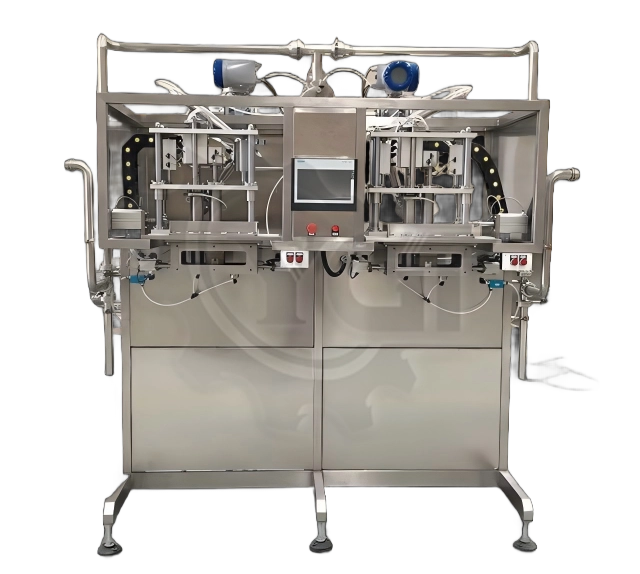
Recent industry trends show a massive shift toward thinner, more sustainable barrier films to meet environmental goals. While eco-friendly, these advanced materials possess significantly narrower thermal windows. This industry-wide evolution makes real-time parameter tracking more critical than ever. Modern equipment is designed to monitor these variables continuously to accommodate such tight tolerances. For instance, a high-capacity bag in drum aseptic filler utilizes integrated thermocouples and pressure transducers to track sealing parameters in real-time. If the temperature drops below the validated setpoint by even a fraction of a degree, the system automatically flags the bag for rejection.
Quality assurance leads often face a difficult balancing act. They must implement rigorous testing protocols to guarantee safety while simultaneously avoiding overly complex procedures that create production bottlenecks. Validating weld quality requires a strategic mix of visual inspections and analytical testing.
Visual inspection serves as the first line of defense. Floor operators should be trained to look for obvious defects under a magnifying lamp—such as extruded polymer beads indicating excessive heat, un-melted milky sections pointing to insufficient heat, or skewed fitments. However, visual checks cannot detect microscopic pinholes or weak bonds. This is where analytical, destructive testing becomes necessary.
To streamline this workflow, facilities should adopt a Simple Validation framework. This involves standardized, repeatable tests that operators can perform quickly right at the line.
| Test Type | Frequency | Methodology | Objective |
|---|---|---|---|
| Visual Inspection | Every 15 minutes | 360-degree visual check of the fitment base under bright lighting. | Identify gross misalignment, burning, or incomplete seals. |
| Squeeze/Burst Test | Hourly | Apply controlled mechanical pressure to a filled sample bag for a set duration. | Verify that the weld can withstand standard handling and transport pressures. |
| Dye Penetration | Shift Change | Inject a contrasting dye into the fitment area and observe for capillary action. | Detect microscopic channels or pinholes invisible to the naked eye. |
| Tensile Pull Test | Daily | Cut a cross-section of the weld and use a tensiometer to pull the layers apart. | Measure the exact force required to break the seal, ensuring it meets baseline specifications. |
Avoiding over-testing is crucial for operational efficiency. By utilizing Acceptable Quality Limit standards, QA teams can easily determine the statistically appropriate sample size for destructive testing. This approach minimizes product waste while maintaining a high confidence level in the overall batch quality.
Even with top-tier equipment, high-speed production environments remain susceptible to occasional weld anomalies. Recognizing the wrong weld early allows maintenance teams to perform root cause analysis before a minor issue escalates into a catastrophic recall.
The three most common weld defects include pinholing, delamination, and channeling. Pinholing often results from microscopic holes in the seal area, typically caused by excessive heat or trapped particulate contamination. Delamination occurs when film layers separate at the weld site, usually pointing to insufficient temperature or inadequate dwell time. Leaking or channeling, where fluid escapes through a specific pathway, is almost always a direct symptom of improper fit-up or uneven jaw pressure.
When troubleshooting these issues, engineers must determine whether the root cause lies with the machine settings, the film material variance, or the dimensional accuracy of the fitments. Troubleshooting becomes slightly more complex when operating multi-head systems. Operators must ensure that both filling heads are calibrated identically. A common bottleneck occurs when one sealing jaw experiences a slight drop in pneumatic pressure, leading to inconsistent weld quality across the lanes.
Consistent weld integrity is not achieved through periodic audits alone; it is the direct result of integrating quality control seamlessly into the daily operational workflow. This preventive mindset begins before the machine even starts running.
Pre-shift calibration is a critical measure. Before initiating a production run, operators must verify that the sealing temperatures, pneumatic pressures, and dwell times match the validated parameters. Running a few test seals and subjecting them to a tensile pull test before full production begins can prevent mid-run failures and costly rework.
Modern BIB filling machines facilitate this workflow through automated monitoring. Programmable Logic Controllers and Supervisory Control and Data Acquisition systems continuously track the performance of the sealing mechanisms. If a heating element begins to degrade and the temperature fluctuates outside the acceptable tolerance band, the system triggers an immediate alarm.
Standardizing records is equally important. Every parameter adjustment and calibration check should be logged digitally. This data provides maintenance engineers with valuable historical trends. If a specific sealing jaw requires progressively higher temperature settings over time, it is a clear empirical indicator that the heating element is nearing the end of its lifecycle and requires replacement.
Achieving consistent fitment weld integrity demands an ongoing commitment to equipment maintenance. For plant managers, the reliability of the packaging line directly correlates with the rigor of the facility's preventive maintenance program. When mechanical components degrade, the precision required for perfect fit-up and heat distribution is compromised.
To maintain peak performance, facilities must transition from reactive troubleshooting to proactive, data-driven maintenance strategies. This involves understanding the lifecycle of critical components, managing spare parts effectively, and ensuring that the human operators are highly trained.
| Maintenance Frequency | Component Focus | Required Action | Impact on Weld Integrity |
|---|---|---|---|
| Daily (Pre-Shift) | Teflon Tapes & Sealing Jaws | Inspect for burns, tears, or residue. Replace Teflon barriers if discoloration is present. | Ensures uniform heat transfer. |
| Weekly | Pneumatic Cylinders & Sensors | Check air pressure stability and calibrate proximity sensors. | Guarantees precise alignment before sealing. |
| Monthly | Heating Elements & Thermocouples | Perform thermal imaging to verify actual jaw temperature matches setpoint. | Prevents film degradation or delamination. |
| Bi-Annually | Load Cells & Mechanical Alignment | Recalibrate load cells and check parallelism using pressure-sensitive carbon paper. | Ensures even pressure across the fitment flange. |
A common pitfall is the lack of a strategic spare parts inventory. When a component fails, the pressure to resume production often leads to the use of substandard, non-OEM parts. This is a dangerous practice when operating high-precision machinery. QA leads must identify and stock critical wear components, including OEM heating cartridges and precision thermocouples, to prevent pressure drops or thermal drift that lead to incomplete welds.
As production demands grow, your machinery must scale accordingly without sacrificing the hermetic integrity of the aseptic seal. Selecting the right equipment requires a deep understanding of your throughput requirements, the materials you process, and your long-term operational goals.
Production volumes dictate the physical architecture of the filling equipment. For facilities handling smaller retail formats, a standard 1-30L filler provides the necessary agility for frequent changeovers. However, as operations expand into industrial supply, the equipment must handle significantly larger volumes and heavier packaging materials. These robust systems are engineered to manage the structural demands of large-format bags, featuring heavy-duty sealing jaws and advanced load-bearing fitment grips.
Not all flexible packaging films are created equal, and your filling equipment must be highly adaptable to different material structures. When selecting equipment, ensure that the machine's PLC allows for highly customizable thermal recipes. Advanced machines utilize pulse-heating technology to achieve a delicate balance, providing rapid heat spikes for thicker fitments while protecting thinner bag film from thermal degradation.
For high-throughput facilities, implementing a Dual Nozzle Aseptic Beverage Filling Machine allows for a significant increase in output without a proportional increase in floor space. However, to maintain perfect weld integrity, both filling heads must operate in absolute synchronization. Modern automated systems feature independent sensors for each nozzle, continuously tracking parameters. If one head deviates, the system isolates the lane, preventing compromised products from reaching the final stage.
Ensuring fitment weld integrity is a continuous process that demands a perfect blend of machine precision, correct setup, and relentless monitoring. Whether running a high-speed multi-nozzle system or a heavy-duty bulk filler, the ultimate objective remains delivering a flawless, hermetic seal. By reviewing quality assurance protocols, investing in proactive maintenance, and upgrading to highly automated systems with real-time monitoring, you can reduce costly errors. Protect your brand reputation by making weld integrity a non-negotiable standard on your factory floor.
The most frequent cause is improper alignment, known as fit-up, combined with temperature fluctuations. If the fitment is not parallel to the sealing jaws, the pressure becomes uneven. This creates cold spots where polymers fail to bond. Maintaining strict calibration of actuators and controllers is the best way to eliminate these failures.
The frequency depends on your Acceptable Quality Limit standards and product sensitivity. Industry best practices recommend burst and peel tests at least hourly, and immediately following any material roll change. Regular testing ensures that machine drift is caught before large volumes of defective product are manufactured.
It requires a more rigorous calibration process to ensure both heads are balanced. Maintenance teams must verify that the pneumatic air supply is evenly distributed to prevent pressure drops when both jaws actuate simultaneously.
Yes, excessive humidity can alter the surface tension and moisture content of polymer films, impacting heat transfer. High humidity may also cause condensation on sensors, leading to inaccuracies. Operating in a climate-controlled cleanroom is essential for consistent seal integrity.
Plant managers should look for specialized manufacturers that focus exclusively on aseptic liquid packaging technologies. It is highly recommended to partner with manufacturers that provide full-scale support, including OEM spare parts and integrated PLC systems capable of real-time weld monitoring, ensuring long-term operational success.


